

Criminal defense lawyers typically bill either by the hour or with a flat fee for a defined job, and many use a mix of both. The right method depends on how predictable the case is, and the fee agreement should state exactly what the quote covers. Hourly charges are often recorded in six-minute increments, so how criminal defense lawyers bill for their time can change your total significantly.
Last Updated: October 30, 2026
Quick Summary
- Hourly billing reflects time spent, so costs can rise with case complexity.
- Flat fees give a clearer upfront price but may not cover unexpected work.
- The most common billing increment is one-tenth of an hour, or six minutes.
- Ask whether a retainer is held in trust or earned on receipt, in writing.
- Review each invoice for vague descriptions, duplicate entries and block billing.
Table of Contents
- How Criminal Defense Lawyers Set Their Fees
- Hourly Billing Versus Flat-Fee Billing
- What a Criminal Defense Lawyer Hourly Rate Typically Reflects
- What a Retainer Covers and How Advance Payments Work
- What Counts as Billable Work
- Billing Increments, Minimum Charges and Rounding
- Reading Your Fee Agreement and Auditing an Invoice
- Scheduling a Fee Discussion Before You Retain Counsel
- Frequently Asked Questions
How Criminal Defense Lawyers Set Their Fees
Most people facing criminal charges want one straight answer: how much will this cost? The honest answer is that how criminal defense lawyers bill for their time depends on the case, the lawyer, and how the fee agreement is written. At the Law Offices of Robert E. Ray, we believe clients deserve to understand every line of a bill before they commit. This guide walks through how fees are set, what gets billed, and what to check before you sign.
A criminal defense lawyer may set fees in one of two ways. Some charge by the hour. Others quote a flat fee for a defined job. Many firms use a mix of both, depending on the charge. A misdemeanor often moves differently than a serious felony, because the work involved is not the same.
Watch out: a low quote is not always a low total. Ask what the quote covers, and what triggers extra charges.
Hourly Billing Versus Flat-Fee Billing
Hourly billing means you pay for the time the lawyer spends on your case. To judge whether a firm's approach fits your situation, read whether you need an aggressive lawyer. Each task gets logged, usually in tenths of an hour. Flat-fee billing means you pay one set amount for a defined service, such as a plea hearing or a DUI defense through trial.
Each model has trade-offs:
- Hourly billing: Costs can rise with case complexity. You see exactly where the time goes.
- Flat-fee billing: The price is clearer upfront. The fee may not cover unexpected work, so read the scope closely.
Neither model is automatically better. The right choice depends on how predictable your case is. A simple, defined matter may suit a flat fee. A case with many unknowns often bills by the hour.
What a Criminal Defense Lawyer Hourly Rate Typically Reflects
A criminal defense lawyer's hourly rate reflects more than the hours worked. You can review the DUI defense services offered and how that work is structured. It may cover the lawyer's experience, the complexity of the cases they handle, overhead, and the market in their area. Ask any lawyer you consider to explain how their rate is set.
When you review a rate, ask:
- How many years has the lawyer practiced criminal defense?
- Will a junior attorney or paralegal handle some tasks at a lower rate?
- Is there a minimum charge for each task?
What a Retainer Covers and How Advance Payments Work
A retainer is an advance payment that secures the lawyer's services. The lawyer then bills against that amount as work is done. A criminal defense attorney flat fee may also be paid in advance, often in full before work starts.
Ask in writing whether the retainer is a deposit held in trust or a fee earned on receipt. The answer changes what happens to unused money if the case ends early. A clear fee agreement should answer that question.
What Counts as Billable Work
Billable work is any time the lawyer spends on your matter. For a first-time DUI in Weld County, see the Weld County first-time DUI legal guide to understand the case steps involved. Common examples include:
- Phone calls and emails with you, the prosecutor, or witnesses
- Legal research and document drafting
- Case preparation and investigation
- Court appearances, including hearings and trial days, which are easier to anticipate after reading how Weld County court works
- Plea negotiation
Some costs are separate from the lawyer's time. These are often called case expenses or court costs, such as filing fees, expert witness fees, or transcript charges. Confirm whether these appear on the same invoice or are billed separately.
Billing Increments, Minimum Charges and Rounding
Billing increments are the smallest unit of time a lawyer records, and they quietly shape every invoice. The most common increment in criminal defense is one-tenth of an hour, or six minutes.
Here is how that plays out in practice. If your lawyer bills in six-minute increments and spends four minutes reviewing a prosecutor's email, the entry is recorded as 0.1 hour. If the lawyer bills in fifteen-minute increments, that same four-minute review becomes 0.25 hour.
Minimum charges work alongside increments. A firm may set a minimum of 0.2 or 0.3 hour for any task, so even a two-minute voicemail confirmation is billed at the minimum.
Rounding practices vary too. Each approach is defensible if it is disclosed, but the cumulative effect on a long case can be meaningful, so the rule should be in the fee agreement, not discovered on the third invoice. (Source: factors influencing attorney fees)
Block billing is a related practice worth understanding.
A simple way to test the impact is to ask for a sample invoice format or a redacted sample entry. If the firm cannot show you how time is recorded, that is a signal to ask more questions before you pay a retainer.
The table below summarises the billing increment, minimum charge and rounding terms the article describes, using the same example figures it gives.
| Term | What it means | Example from the article |
|---|---|---|
| One-tenth hour increment | Most common unit; six minutes | Four-minute review billed as 0.1 hour |
| Quarter-hour increment | Fifteen-minute unit | Same four-minute review billed as 0.25 hour |
| Minimum charge | Floor applied to a task | Set at 0.2 or 0.3 hour |
| Rounding up | Entry rounded to next full unit | Common practice per time entry |
| Block billing | Several tasks grouped into one entry | Example entry totals 4.5 hours |
| Trust-account accounting | Balance shown on invoice | Beginning, drawn and ending balances |
Reading Your Fee Agreement and Auditing an Invoice
Your fee agreement is the controlling document on cost, and it should answer five things before you sign: the billing method (hourly, flat fee, or a mix), the hourly rates for each timekeeper, the retainer amount and whether it is held in trust or earned on receipt, what the quoted fee includes and what triggers additional charges, and how expenses are handled. If any of those is missing or vague, ask for it in writing. An engagement letter that leaves scope undefined is where most fee disputes begin.
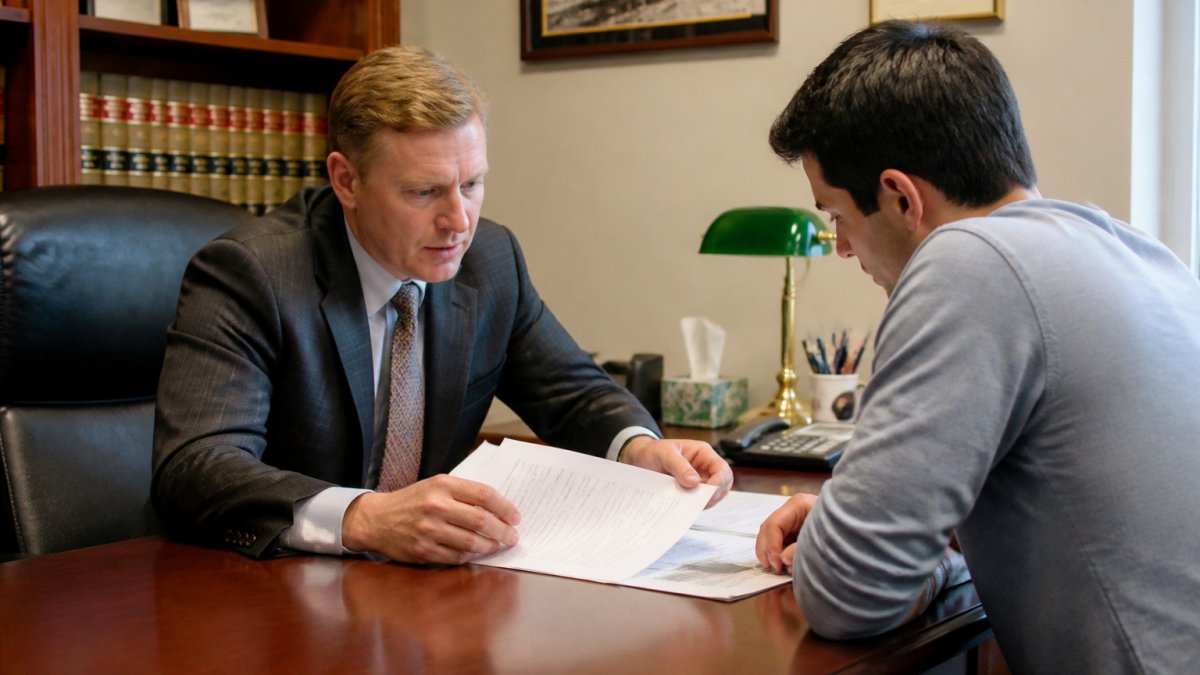
Scope boundaries deserve special attention. A flat fee for a plea hearing may not include a motion to suppress, a probation violation hearing, or a trial. An hourly engagement may exclude expert fees, investigator costs, transcript charges, and filing fees. Ask what happens if the case is resolved early, if the client substitutes counsel, or if the lawyer withdraws.
When the invoice arrives, read it as a document, not just a total. Time entries should describe the task specifically enough that you can connect it to work you know happened. "Phone call" is weak; "telephone conference with client re: arraignment date and discovery status" is auditable. Look for these patterns:
- Vague descriptions: Entries like "review file" or "research" with no subject matter are hard to verify. Ask for clarification.
- Duplicate entries: The same task appearing twice on the same date, or a court appearance billed both as a hearing and as travel or waiting time without explanation.
- Incremental creep: Many short entries rounded up to the minimum, which can inflate totals on a busy case.
- Block billing: Multiple tasks grouped into one large entry, which obscures whether each task was reasonable.
- Expense mixing: Case expenses listed without receipts or lumped into the fee line rather than shown separately.
Trust-account handling is part of the audit. If you paid a retainer held in trust, the invoice should show the beginning balance, the fees and expenses drawn against it, and the ending balance. State bar rules in Colorado govern how client funds are held in trust and accounted for; check the Colorado Supreme Court's Rules of Professional Conduct for the current requirements.
If something looks wrong, raise it in writing and ask for an itemized explanation before paying the disputed portion. Most fee agreements include a dispute-resolution clause, and many state bar associations offer fee arbitration programs as an alternative to court. A lawyer who welcomes transparency will walk you through the entries; a refusal to explain is itself useful information.
A practical routine is to review each invoice within a week of receipt, compare it to your own notes of calls and court dates, and send a short written list of questions rather than a general complaint. Specific questions get specific answers, and a clear paper trail protects both you and the lawyer.
Scheduling a Fee Discussion Before You Retain Counsel
Before you hire a criminal defense lawyer, schedule a fee discussion. If you have just been arrested on a felony, read the immediate steps to take after a felony arrest first. Bring your charges, your court dates, and your questions. Ask for an estimated cost range for your case stage, and ask what could change that estimate.
Good questions to ask include:
- What is your billing method, and why does it suit my case?
- What does the retainer cover, and what happens to any unused amount?
- How do you bill for phone calls, emails, and court appearances?
- Can I get an itemized invoice each month?
Clear answers at the start make the rest of the case easier to manage.
Frequently Asked Questions
Do criminal defense lawyers charge hourly or use flat fees?
Many criminal defense lawyers use one of two structures: hourly billing, where time is tracked and charged at a set rate, or a flat fee, which covers a defined scope of work for a fixed price. Hourly billing suits cases whose length is hard to predict, such as contested trials. Flat fees are more common for narrower matters with a clear endpoint, such as a single misdemeanor plea. Your fee agreement should state which structure applies, what work it covers, and what would trigger additional charges. Ask for this in writing before you sign.
What does a criminal defense lawyer's retainer cover?
A retainer is an advance payment that secures the lawyer's services. It is not a cost estimate and not a guaranteed total. In many cases the lawyer bills time against the retainer and draws it down, and you may be asked to replenish it. Some retainers are earned on receipt and are not held in trust, while others are deposited in a client trust account until work is performed. Your fee agreement should explain how the retainer is handled, what happens to any unused balance, and whether the funds are refundable if the representation ends early.
What work is included in a criminal defense lawyer's bill?
Billable work typically includes court appearances, trial preparation, legal research, drafting motions and other documents, reviewing discovery, investigation, negotiating with prosecutors, and client communication such as calls and emails. Many lawyers also bill for time spent traveling to court. Administrative tasks are sometimes billed and sometimes absorbed into overhead, so it helps to ask directly. Your fee agreement and itemized invoices should show what was done, by whom, and how long it took.
Can a criminal defense lawyer charge for phone calls and emails?
Yes, if your fee agreement allows it. Substantive calls and emails about strategy, evidence, or court dates are commonly billed in time increments. Brief scheduling messages may be billed at a minimum charge or not at all, depending on the firm's policy. Ask how short communications are recorded, whether they are billed separately, and whether there is a monthly cap or included allowance. Reviewing itemized entries will show how often and how long these contacts were billed.