

A strategic criminal defense approach is worth it because it builds a plan around your specific facts, weak evidence, and realistic outcomes instead of reacting to each step. Early planning protects your options, and the strategy often starts with a review of the prosecution's evidence.
Last Updated: October 29, 2026
Quick Summary
- Early planning preserves evidence, identifies witnesses, and sets deadlines before options narrow.
- Evidence review compares police reports, witness statements, physical evidence, and recordings for gaps and contradictions.
- Compare dismissal, plea negotiation, and trial by asking for the realistic range of outcomes for each path.
- Ask your attorney about collateral consequences, such as immigration or firearm effects, before agreeing to any plea.
- Revisit the defense plan at arraignment, after discovery, and before any plea deadline.
Table of Contents
- What a Strategic Criminal Defense Approach Actually Means
- Why Early Planning Shapes Everything That Follows
- Criminal Case Evidence Review: Where Strategy Starts
- Criminal Defense Strategies and How They Change by Charge
- Trade-Offs Among Plea Negotiations, Dismissal and Trial
- Criminal Defense Strategy Examples From Common Cases
- Benefits of Hiring a Criminal Defense Lawyer for Your Next Step
- Frequently Asked Questions
What a Strategic Criminal Defense Approach Actually Means
A strategic criminal defense approach is a plan built around the specific facts of your case, not a generic response to any charge. A plan shaped to your case can give you more control than reacting to each step as it arrives. (Source: the critical role of early intervention in legal proceedings)
Many people assume a criminal defense lawyer mainly negotiates a plea. A strategy is broader. It covers how the case is investigated, which motions might be filed, whether a witness is credible, and whether trial is a real option. Most of that work happens before anyone talks about a deal.
A strategy usually answers four questions:
- What exactly is the charge, and what penalties does it carry?
- What evidence does the prosecution have, and what is missing?
- Were any rights violated during the arrest or investigation?
- Which outcome is realistic, and what does each path cost you?
Why Early Planning Shapes Everything That Follows
The first days after an arrest often decide how much room you have later. Statements made to police, a missed court date, or a rushed decision about a plea can limit your options for months. Early planning protects those options.
Early work usually includes:
- Preserving evidence, such as dash-cam footage, texts, or surveillance video, before it is erased
- Identifying witnesses while their memories are fresh
- Reviewing the arrest report for timing, probable cause, and procedure
- Setting a schedule for bond hearings, arraignment, and discovery deadlines
Waiting until the case is on the calendar often means losing evidence that could have helped. Starting early also gives your attorney time to build a plan rather than react.
Criminal Case Evidence Review: Where Strategy Starts
Evidence review is the foundation of a strategic defense. Your attorney reads everything the prosecution has turned over in discovery and compares it against what actually happened. Gaps and contradictions often shape the entire defense.
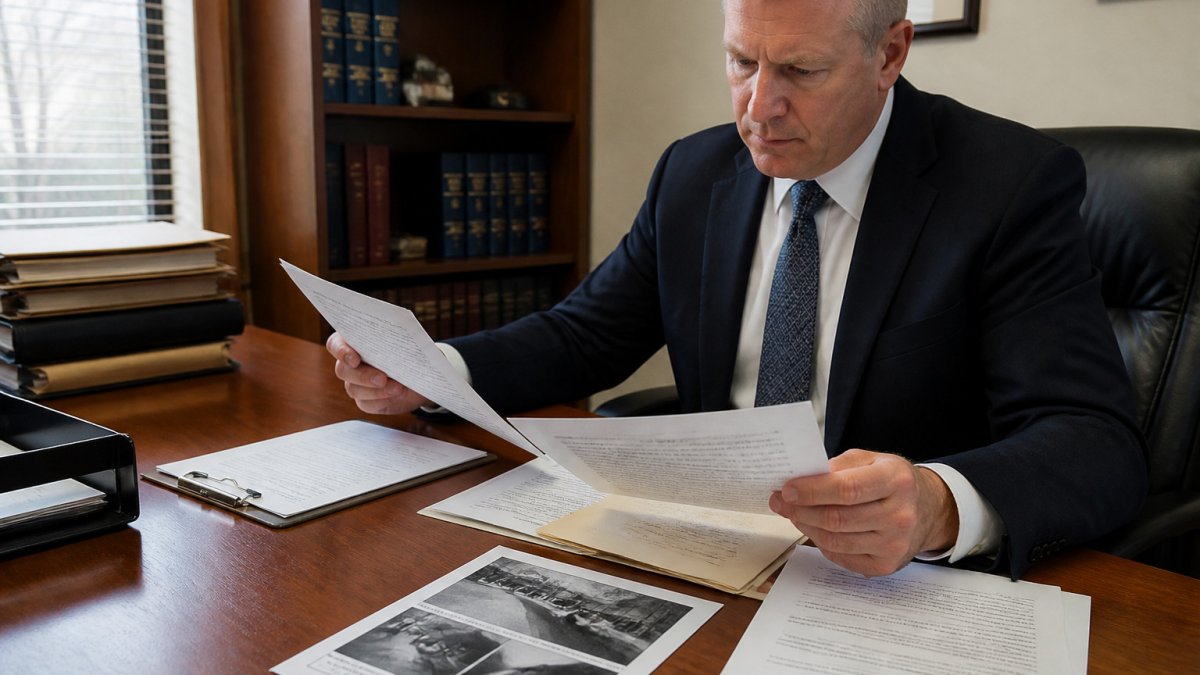
!A defense attorney in a business suit reviewing printed case documents and a police report at a wooden desk in a quiet law office
Common areas of review include:
- Police reports: Look for inconsistent timelines or details that change between versions.
- Witness statements: Compare what each person said at different points in the case.
- Physical evidence: Check chain of custody, lab procedures, and how items were stored.
- Recordings: Confirm whether video or audio is complete, clear, and properly labeled.
A weakness found in evidence review can support a motion to suppress, a challenge to a witness, or a stronger position in negotiations. Finding it early matters, because some of these issues have filing deadlines.
Criminal Defense Strategies and How They Change by Charge
Strategy depends heavily on the type of charge. A tactic that works in a drunk driving case may be useless in a fraud case, and the reverse is also true. The charge type tells your attorney what the prosecution must prove, which evidence matters most, and which pretrial motions are worth filing. Below is how the focus typically shifts across common charge categories. These are general patterns, not predictions about any specific case, the facts and the jurisdiction always control.
- DUI and impaired driving: The defense usually examines three pressure points: whether the traffic stop was lawful, whether field sobriety testing was administered and scored correctly, and whether the breath or blood sample was collected, stored, and tested according to protocol. A common pattern is to file a motion to suppress if the stop lacked reasonable suspicion or if the chemical test was mishandled. See the firm's specific DUI defense approach for how these issues are handled.
- Drug offenses: Cases often turn on the legality of the search, the chain of custody for the substance, and whether the quantity supports the charge as filed. Defense may challenge a warrant's scope, question whether the substance was properly identified and weighed, or argue that the accused did not possess the drugs.
- Assault and violent offenses: Defense often centers on self-defense, identity, or whether the level of force was justified. Witness credibility and the physical evidence carry heavy weight. Your attorney will compare each statement with medical records, photographs, and any video, and will look for statements made under pressure or without a clear view of events. To see how this firm handles violent crime charges, review its approach to that category of case.
- Theft and property crimes: The key questions are usually intent and value. Defense may examine whether the property belonged to another, whether the accused intended to permanently deprive the owner, and how the prosecution established the dollar value that drives the charge level. Receipts, surveillance footage, and store policies often matter more than witness testimony.
- White-collar and fraud offenses: Cases often turn on intent and documentation. The defense may focus on records, financial timelines, and whether the government can prove the accused knew about the wrongdoing. Learn whether the firm handles white-collar matters before you decide.
The same case can also shift strategy if new evidence appears, a witness changes their story, or a procedural error comes to light. A plan built at the start should be revisited at each stage, after arraignment, after discovery, and before any plea deadline, because what looked like the strongest path in week one may not be the strongest path in month three.
Trade-Offs Among Plea Negotiations, Dismissal and Trial
Every criminal case eventually reaches a decision point. The three most common paths each carry different costs and benefits, and none is automatically the right choice. What most guides leave out is how to compare them. The framework below is the one many practitioners use to walk clients through the decision.
| Path | Main Benefit | Main Risk | Best Suited When |
|---|---|---|---|
| Dismissal | Case ends with no conviction | Depends on prosecution decisions and the judge's ruling on any motion | Evidence is weak, a rights violation occurred, or the charge cannot be proven |
| Plea negotiation | Lower charge or sentence, and a known outcome | Admission of guilt and a lasting record | Evidence is strong, or a reduced charge or diversion option is available |
| Trial | Chance of acquittal and a clean record | Higher penalties if convicted, plus time, cost, and uncertainty | The prosecution's case has real gaps that cross-examination can expose |
How to compare the paths, four questions to ask your attorney:
- What is the realistic range of outcomes? Ask for the best case, the worst case, and the most likely case for each path, not a single prediction. A plea offer that looks generous may be worse than the likely trial outcome, or far better, depending on the evidence.
- How long does each path take? A plea may resolve in weeks or months; a trial may take a year or more, with multiple continuances. Ask how the timeline affects your job, housing, family, and any pretrial release conditions.
- What does each path cost? Ask how your attorney bills for negotiation versus trial preparation, and whether expert witnesses (forensic analysts, accident reconstruction, medical experts) would add cost. Get the fee structure in writing before you decide.
- What collateral consequences follow each outcome? A plea can carry effects beyond the sentence itself, immigration consequences, professional license issues, firearm rights, and employment background checks. Ask your attorney to explain every collateral effect before you agree to anything.
A note on uncertainty. Trials are unpredictable by design. A jury may acquit on one count and convict on another, and a judge may impose a sentence above or below what the attorneys expected. A good attorney will not promise a result; they will explain the range and help you decide which risk you can live with. You make the final decision about whether to plead or go to trial, and your attorney's job is to make sure that decision is informed.
Criminal Defense Strategy Examples From Common Cases
Real strategies vary widely, but these examples show how the thinking typically works. They are general illustrations, not promises about any outcome.
- A traffic stop with disputed field sobriety tests: The defense reviews the officer's body camera footage, the testing conditions, and whether the stop itself was lawful. If the stop lacked legal justification, a motion to suppress may be possible.
- A fraud allegation based on bank records: The defense builds a timeline showing legitimate business activity and asks whether the government can prove intent, not just that money moved.
- A violent offense with conflicting witness accounts: The defense compares each statement with the physical evidence and looks for statements made under pressure or without a clear view of events.
In each case, the strategy begins with facts and ends with a choice about the best path forward.
Benefits of Hiring a Criminal Defense Lawyer for Your Next Step
A criminal defense lawyer brings structure, experience, and an advocate's perspective to a stressful situation. The benefits go beyond courtroom presence.
- Protection from costly early mistakes, such as unnecessary statements to police
- Familiarity with the local court system in Weld County
- Clear explanations at every step, so you understand what is happening and why
- A defense plan tailored to your charge, rather than a one-size-fits-all approach
- Advocacy in negotiations and hearings, where a skilled attorney can push for better terms
The firm's bilingual services are available, so you can discuss your case in Spanish. You can also browse bilingual criminal defense lawyers in Greeley to find one who communicates in your preferred language.
Getting an experienced attorney involved early can help you protect your rights and your future. Contact Law Offices of Robert E. Ray today to discuss your situation and learn how a strategic defense can work for you.
Frequently Asked Questions
What does a strategic criminal defense approach involve?
A strategic approach starts with understanding the specific charges, the potential penalties under the applicable state and federal law, and the facts the prosecution must prove. The defense attorney then reviews police reports, witness statements, physical evidence and procedural history to identify weaknesses. From there, the attorney chooses a plan, such as challenging evidence, negotiating with the prosecutor or preparing for trial, and adjusts it as new information arrives. Outcomes vary widely by case, so a consultation is the best way to learn what applies to yours.
How can a defense strategy affect the outcome of a criminal case?
A defense strategy can influence whether charges are reduced or dismissed, whether evidence is excluded through a suppression motion, and what sentence or plea terms are on the table. Early decisions, such as requesting discovery or filing motions on time, often shape the options available later. No strategy guarantees a result, but a deliberate plan usually gives the defense more leverage than a reactive one. Talk with a criminal defense attorney about how your case facts affect your options.
How do criminal defense attorneys evaluate evidence?
Attorneys compare the prosecution's evidence against the elements of each charge and check whether the burden of proof can be met. They review how evidence was collected, whether search or seizure rules were followed, and whether witness statements are consistent over time. They also look for gaps, such as missing lab documentation or unexplained timelines. This review helps identify possible defenses and informs whether to negotiate, challenge the evidence or prepare for trial.
When should someone contact a criminal defense attorney?
Contact a criminal defense attorney as early as possible, ideally before answering police questions in detail or making statements to anyone involved. Early involvement allows the attorney to preserve evidence, advise on rights and begin the case review while details are still fresh. Deadlines for certain motions and hearings can be short, so waiting can narrow your options. A first consultation can clarify the charges and the next steps.