

The best way to learn how to evaluate a criminal defense attorney is to sit down with one and watch how they work. It is a working meeting where you test whether this lawyer understands your case, your risks, and your goals. (Source: the American Bar Association's guidelines on client communication)
Table of Contents
- Start with a Criminal Defense Attorney Consultation
- Questions to Ask a Criminal Defense Attorney Before You Hire
- Criminal Defense Attorney Red Flags That Should End the Conversation
- Understand Criminal Defense Lawyer Fees and Billing Transparency
- Verify Case Results, Trial Experience, and Local Court Knowledge
- Use a Side-by-Side Attorney Comparison Worksheet
- Conclusion: Making a Confident Hiring Decision
- Frequently Asked Questions
Last Updated: October 5, 2026
Start with a Criminal Defense Attorney Consultation
At the Law Offices of Robert E. Ray, we have handled criminal defense in Weld County courts since 1975.
A criminal defense attorney consultation is a scheduled meeting where you describe your charges and the lawyer explains your legal options. Most first meetings run 30 to 60 minutes.
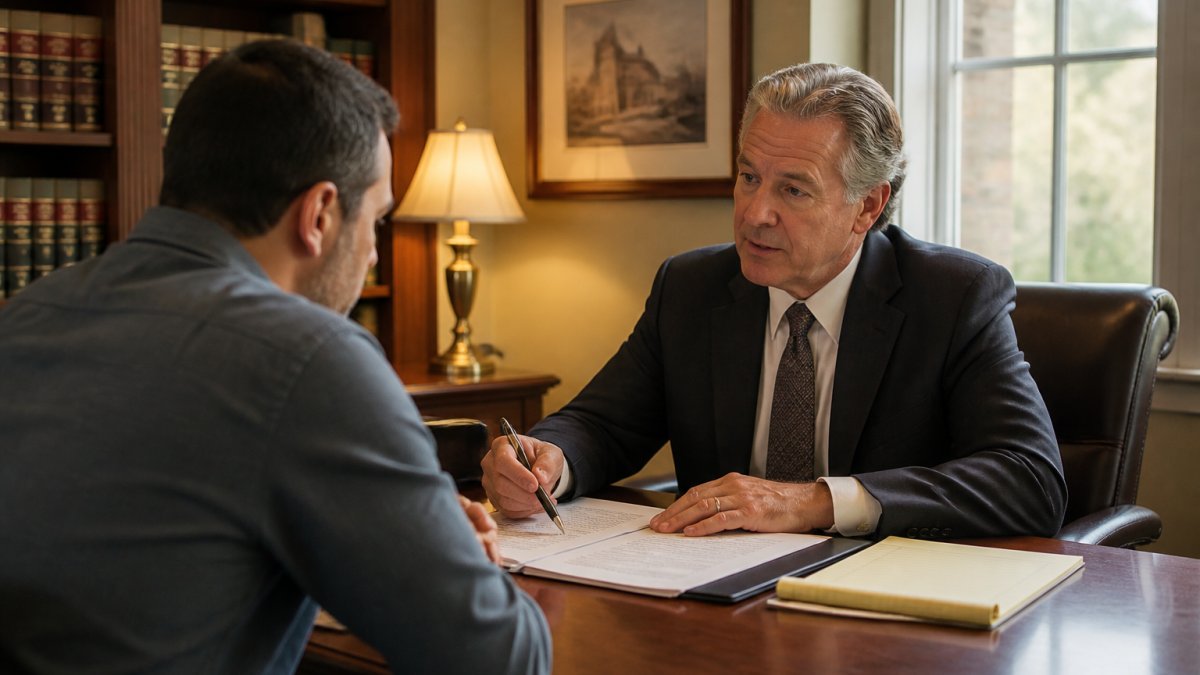
What to Bring and What to Expect on the Day
Bring anything connected to your case. Small details often shape the defense strategy.
- The charging documents or summons, if you have them
- Your booking paperwork and any bond conditions
- A written timeline of what happened, in your own words
- Names and contact info for witnesses
- Any texts, emails, or photos related to the incident
- A list of your questions, written down
Expect the lawyer to ask about your record, your job, and your family. Those facts matter because they shape what a prosecutor will offer and what a judge will consider.
Questions to Ask a Criminal Defense Attorney Before You Hire
The right questions to ask a criminal defense attorney fall into five groups: experience, strategy, communication, cost, and honesty. Ask all five. A good lawyer welcomes them. A weak one dodges.
Here is a practical list you can print and bring along:
- How many cases like mine have you handled in this court?
- What are the likely outcomes, and what is the worst case?
- Who will actually handle my case, you or an associate?
- How often will you update me, and how?
- What are your fees, and what is not covered?
- Have you taken cases like mine to trial?
- What should I do, and not do, starting today?
Pay attention to how the lawyer answers, not just the words. Clear answers with real detail signal a lawyer who has done this work many times.
Criminal Defense Attorney Red Flags That Should End the Conversation
Walk away when you see these criminal defense attorney red flags. They predict a bad working relationship, not just a bad first meeting.
- A guarantee of dismissal or a promised outcome
- Pressure to pay a large fee on the spot
- No written fee agreement offered
- Vague answers about courtroom experience
- No clear plan for who handles your calls
- Trash talk about every other lawyer in town
- Promises about "connections" with prosecutors or judges
That last one deserves a hard stop. Prosecutors and judges are bound by ethical rules that limit private deals, and any lawyer who claims special influence is either exaggerating or describing something improper. Neither helps you.
Understand Criminal Defense Lawyer Fees and Billing Transparency
Criminal defense lawyer fees are not one-size-fits-all, and the cheapest quote is rarely the best measure of value. What matters is whether the fee structure matches your case and whether the terms are in writing before you pay anything.
The Three Common Fee Models
| Fee Model | How It Works | Watch For |
|---|---|---|
| Flat fee | One price for a defined scope, often through plea or through trial | What happens if the case goes to trial, appeals, or a probation violation |
| Hourly | You pay for time worked, billed in increments (often tenths of an hour) | How often you get statements, and whether you get an estimate of total hours |
| Staged fee | Price per phase, arraignment, pre-trial, plea, trial | What triggers the next stage and whether unused stages are refundable |
Some firms blend these: a flat fee for pre-trial work, then an hourly or separate flat rate if the case goes to trial. Ask which model applies to your case and get the answer in writing.
How Retainers Actually Work
A retainer is an upfront payment that secures the attorney's representation. Two common versions:
- Evergreen or replenishing retainer. The attorney draws against the balance as work is done and asks you to top it up when it falls below a threshold. Common with hourly billing.
- Flat-fee retainer. A single payment covers a defined scope of work. No replenishment unless the scope changes.
Ask whether the retainer is refundable, what happens to any unused portion if the case resolves early, and whether the fee covers the entire case or only a phase of it.
What a Written Engagement Agreement Should Clarify
Before you sign, the agreement should spell out:
- The scope of representation, which charges, which court, which phases
- The total fee or the hourly rate, and how it is billed
- Whether the retainer is refundable and under what conditions
- Who pays for costs and expenses: investigators, expert witnesses, transcripts, filing fees, and lab work
- What happens if the case goes to trial, is appealed, or a new charge is filed
- How and when you will receive billing statements
- Who at the firm handles your case day to day
If a firm will not put fees and scope in writing, treat that as a red flag. A handshake on price is not a fee agreement.
Comparing Fees Across Candidates
Do not compare bottom-line numbers in isolation. Compare what each quote covers. A lower flat fee that excludes expert costs may end up costing more than a higher fee that includes them. Ask each attorney the same three questions: What is included? What is excluded? What triggers additional charges?
Pricing depends on the charges, the court, and the complexity of the case, so a responsible firm quotes after the consultation, not before. That is not evasion, it is an acknowledgment that a flat fee quoted before anyone has read the charging documents is a guess.
Verify Case Results, Trial Experience, and Local Court Knowledge
Claims about a success rate or a track record mean nothing without proof. Most guides tell you to "check the record" and stop there. Here is how to actually do it, and what the records can and cannot tell you.
How to Verify an Attorney's Case History
Start with the court where your case is filed. Most state trial courts maintain a public case search, and many federal districts use PACER, the federal judiciary's online records system. Search the attorney's name as counsel of record, then filter by charge type and date range.
A practical sequence:
- Ask the lawyer for two or three specific case numbers or matters similar to yours. A confident attorney will provide them.
- Pull those dockets yourself through the court's public portal or PACER.
- Read the docket entries, not just the outcome. Dockets show motions filed, hearings held, plea dates, and whether the case went to trial.
- Cross-check the attorney's name against the state bar's public disciplinary and license-status lookup.
What the records will not show you: the strength of the evidence against the defendant, the client's prior record, the prosecutor's charging discretion, or whether a plea was a good result given the facts.
Trial Experience: What to Look For
Most criminal cases resolve through plea negotiation, not trial (Prevalence of Guilty Pleas). That does not make trial experience optional. Prosecutors calibrate plea offers based on whether defense counsel has a reputation for taking cases to a jury. A lawyer who has never picked a jury has less leverage at the negotiating table.
Ask directly: How many jury trials have you taken to verdict? In what types of cases? When was the most recent one? You can confirm trial dates on the docket, a trial setting that proceeded to verdict will show jury selection and verdict entries.
Local Court Knowledge
Every local court runs on its own habits: how motions are scheduled, which judges expect written pre-trial filings, how the prosecutor's office handles diversion or deferred adjudication, and what a realistic sentencing range looks like for a given charge. A lawyer who appears in that courthouse weekly knows these patterns. Ask which judges the attorney has appeared before and how the local prosecutor's office typically handles your charge type.
A Note on Firm History
Longevity in a jurisdiction is verifiable in a way that marketing claims are not. A firm that has practiced in the same courts for decades has a paper trail you can pull yourself. Use that trail, case numbers, docket entries, bar records, rather than testimonials alone when you weigh experience.
Use a Side-by-Side Attorney Comparison Worksheet
Most guides skip this step. Do not. A comparison worksheet forces you to judge lawyers on the same criteria instead of on who made you feel best in the room.
Score each lawyer from 1 to 5 on these points after every consultation:
- Experience with your specific charge
- Trial record and willingness to go to trial
- Knowledge of the local court and its procedures
- Communication plan and response time
- Fee clarity and written agreement
- Honesty about risks and likely outcomes
- Rapport and trust during the meeting
Then total the scores. If two lawyers tie, pick the one who explained your options most clearly. That person will keep you informed when the case gets stressful.
Conclusion: Making a Confident Hiring Decision
A criminal charge puts your job, your reputation, and your freedom on the line. The lawyer you choose shapes all three. Take the consultation seriously, ask the questions above, verify the claims, and compare candidates on paper before you sign anything.
If you are facing charges in Greeley or anywhere in Northern Colorado, the Law Offices of Robert E. Our firm has defended clients in Weld County courts since 1975, built a reputation as a bulldog in the courtroom, and offers bilingual services for Spanish-speaking clients.
Contact us to schedule a consultation and get a clear, honest assessment of your legal options.
Frequently Asked Questions
What should I look for in a criminal defense attorney?
Look for a lawyer with direct experience handling charges like yours, a record of trial work, and clear communication. Ask about their familiarity with the local court where your case is filed. Check whether they explain your legal options without pressure. A good attorney will discuss possible outcomes honestly and outline a defense strategy tailored to your situation, not a generic pitch.
What are red flags when choosing a criminal defense attorney?
Red flags include promises of a guaranteed outcome, pressure to plead guilty at the first meeting, refusal to discuss fees in writing, and a lack of specific experience with your type of charge. Also be wary if the attorney cannot describe their approach to your case or seems unfamiliar with the local court's procedures. Trust your instincts if they dodge your questions.
How important is trial experience when choosing a criminal defense lawyer?
Trial experience matters because it affects how prosecutors view your case. An attorney known for taking cases to trial may negotiate from a stronger position. Ask how many trials they have handled and what types. While most cases resolve through plea negotiation, a lawyer ready to go to trial can protect your rights when the offer is not fair.
What should a written engagement agreement clarify about fees?
A written engagement agreement should state the fee structure (flat fee or hourly), what costs are included or extra, how you will be billed, and whether the retainer is refundable. It should also outline the scope of representation, such as whether it covers pre-trial motions, trial, or appeals. Ask for this in writing before you pay anything.





