
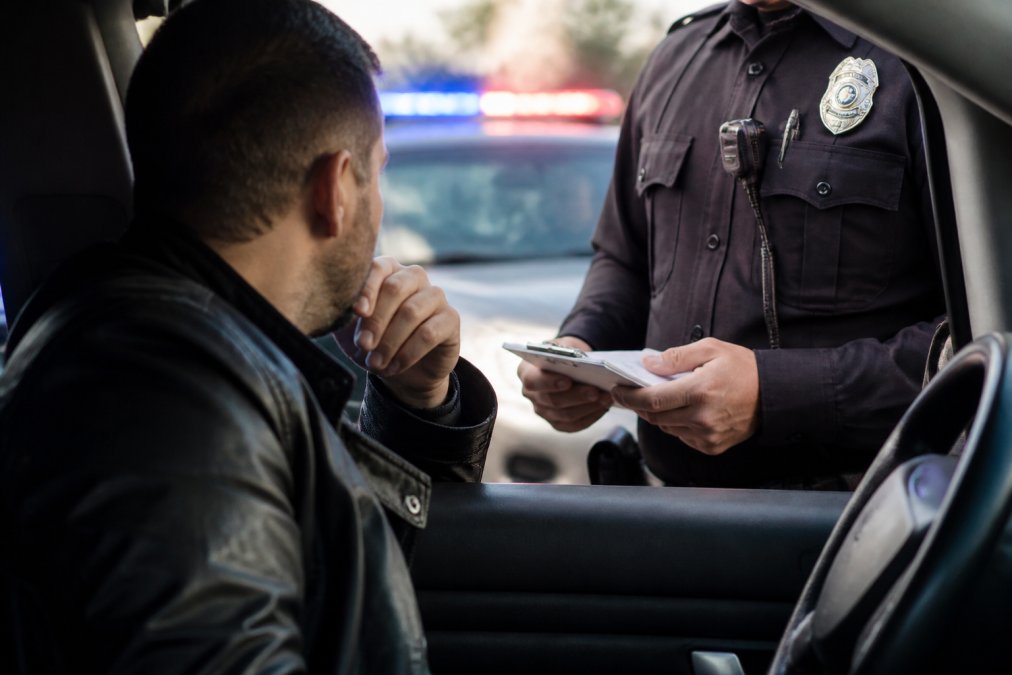
A first time DUI in Greeley triggers a two-track legal process: a criminal case in Weld County Court and a separate civil action against your driver's license. Both run simultaneously and carry serious consequences.
Table of Contents
- What Happens After a First Time DUI Arrest in Greeley
- First Time DUI Jail Time Colorado: What the Law Requires
- Fines, Community Service, and Court-Ordered Classes
- Colorado DMV License Suspension DUI: The Express Consent Law
- Criminal Court vs. DMV Hearing: Two Separate Battles
- DUI Defense Strategies Colorado: How to Fight the Charge
- Protecting Your Professional License and Your Future
- Your Next Steps After a Greeley DUI Arrest
- Frequently Asked Questions
Last Updated: September 7, 2026
What Happens After a First Time DUI Arrest in Greeley
Colorado treats first-time DUIs seriously, but the outcome depends heavily on your blood alcohol content (BAC), whether you refused chemical testing, and the facts of the stop. At Law Offices of Robert E. Ray, we have defended clients in Weld County courts since 1975; the most common mistake we see is waiting too long to act.
First Time DUI Jail Time Colorado: What the Law Requires
First time DUI jail time Colorado law mandates a minimum of 48 hours to 5 days in jail for a standard conviction, but most first-time offenders can satisfy this through community service or work release. The mandatory minimums increase if your BAC was 0.20 or higher, if you refused testing, or if a minor was in the vehicle. Many first-time offenders assume jail is off the table entirely; that assumption is wrong and dangerous.
The court also typically imposes probation for 12 to 24 months, with conditions like no alcohol consumption, random sobriety testing, and court-ordered classes. Violating probation carries its own consequences, including serving the suspended portion of your sentence. A skilled defense attorney can often negotiate alternative sentencing, but this requires presenting mitigating factors early.
Fines, Community Service, and Court-Ordered Classes
Financial penalties add up faster than most people expect. A first-time DUI conviction brings fines, court costs, and fees that can strain a budget, and the total depends on your BAC level and whether aggravating factors exist. The court will also order community service hours and mandatory alcohol education classes.
The specific numbers vary by county and by the facts of your case, so check current Colorado statutes for exact ranges. What remains consistent is the total cost picture: between fines, classes, increased insurance rates, and SR-22 insurance requirements, a first-time DUI is expensive.
Colorado DMV License Suspension DUI: The Express Consent Law
Colorado's Express Consent Law, codified in Colorado Revised Statutes § 42-4-1301.1, operates on a simple principle: by holding a driver's license and operating a vehicle on state roads, you have already given your implied consent to submit to a chemical test if a law enforcement officer lawfully arrests you on suspicion of DUI.
Refusing that test triggers an automatic civil penalty through the Colorado Division of Motor Vehicles, entirely separate from your criminal case. The officer will typically confiscate your license at the scene or shortly after the arrest and issue a temporary permit valid for seven days. That seven-day window is the only period you have to request a formal DMV hearing to contest the suspension.
Suspension Timeframes for First-Time Offenders
The length of your license suspension depends on whether you provided a sample and what it showed. For a first offense with a BAC of 0.08 or higher, the standard suspension is nine months. If you refused to provide a sample, the suspension extends to one year. These are minimums, aggravating factors can extend them.
A key distinction that confuses many Greeley drivers: the DMV suspension runs independently of any court-ordered license restriction. Even if the criminal court is lenient, the DMV can still suspend your license.
The DMV Hearing Process: What Actually Happens
Requesting the hearing is straightforward but time-sensitive. You must submit your request to the Colorado DMV within seven calendar days of the arrest date, online, by fax, or by mail. The hearing is typically scheduled within 60 days and conducted by a hearing officer from the DMV's Administrative Hearings Section.
At the hearing, the arresting officer is usually present and must testify about the stop. The hearing officer evaluates three questions: Did the officer have reasonable grounds to believe you were driving under the influence? Were you lawfully arrested? Did you refuse testing or submit to testing showing a BAC over the legal limit? The burden of proof here is lower than in criminal court.
The Express Consent Refusal Penalty
Refusing chemical testing carries a separate, more severe consequence under the Express Consent Law. Beyond the longer one-year suspension, a refusal can be used against you in the criminal case. Prosecutors can introduce evidence of your refusal at trial, and jury instructions will tell jurors they may infer that your refusal suggests you believed you were intoxicated.
The Ignition Interlock Device Requirement
One consequence that most general guides omit: Colorado law requires an ignition interlock device (IID) for all DUI convictions, including first offenses. After your suspension period ends, you must have an IID installed in any vehicle you drive for a period determined by the court and the DMV.
The costs add up: installation typically runs $50 to $150, and monthly monitoring fees range from $60 to $80. You are responsible for all of these costs, and the requirement applies even if your license was not suspended because you won the DMV hearing.
Colorado Division of Motor Vehicles DUI information provides official guidance on the hearing process, suspension timeframes, and IID requirements. Understanding this administrative track is not optional, it is the difference between keeping your driving privileges and losing them for a year or more.
Criminal Court vs. DMV Hearing: Two Separate Battles
The dual-track system means you fight on two fronts simultaneously. The criminal court case determines guilt, jail time, fines, and probation. The DMV hearing determines whether your license gets suspended and for how long. Winning one does not guarantee winning the other.
In criminal court, the prosecution must prove guilt beyond a reasonable doubt. Your attorney can challenge the traffic stop's legality, the field sobriety test administration, the breathalyzer calibration, and the chain of custody for blood samples. At the DMV hearing, the burden is lower, but the hearing officer must still find that the officer had reasonable grounds for the stop. Colorado Division of Motor Vehicles DUI information provides official guidance on the hearing process and license consequences.
Because the stakes differ, what works in one forum may not help in the other. A strong DMV defense might focus on procedural errors, while a strong criminal defense might focus on reasonable doubt or constitutional violations.
DUI Defense Strategies Colorado: How to Fight the Charge
DUI defense strategies Colorado attorneys use most often target the evidence itself. The stop must have been lawful, meaning the officer needed reasonable suspicion of a traffic violation or criminal activity. Field sobriety tests are notoriously subjective, and breathalyzer machines require regular calibration and maintenance.
The timeline matters too. What happened between the stop and the chemical test? Colorado law requires testing within a specific window, and the prosecution must document the chain of custody for any blood sample. An experienced defense attorney examines every step for errors that could lead to suppressed evidence or reduced charges. Colorado General Assembly DUI statutes outlines the statutory framework, but applying it to the facts of your case requires courtroom experience.
Protecting Your Professional License and Your Future
A DUI conviction reaches far beyond fines and jail time, especially for professionals. Nurses, teachers, commercial drivers, and anyone holding a state-issued professional license faces potential disciplinary action. Many licensing boards require disclosure of any arrest, even before conviction.
The impact on your criminal record is equally serious. A conviction stays on your record permanently unless you pursue a record seal, and employers routinely run background checks. This is where aggressive representation matters most. A reduction to a lesser charge or a dismissal can mean the difference between a minor blemish and a career-ending conviction. Colorado Judicial Branch criminal records information explains how convictions appear on your record and the options for sealing in certain circumstances.
The Greeley Tribune has noted the reputation of Bob Ray as a bulldog in the courtroom who gets results. When your professional future hangs in the balance, you need an attorney who will fight rather than push you toward a plea deal.
Your Next Steps After a Greeley DUI Arrest
The first 48 hours after a DUI arrest in Greeley are the most consequential of your case. What you do, or fail to do, in this window can determine whether you keep your license, whether evidence gets preserved, and whether you face the full weight of the penalties or a negotiated reduction.
Hour 1-12: The Immediate Aftermath
Request your DMV hearing before anything else. The seven-day deadline is measured from the arrest, not from when you receive paperwork. The Colorado DMV allows you to request the hearing online, and doing so immediately protects your right to challenge the administrative suspension. Do not wait to consult an attorney before making this request, the request itself does not commit you to any position, and missing the deadline forfeits your right to a hearing entirely.
Write down everything you remember about the stop. Your memory of the officer's observations, the field sobriety tests administered, the exact wording of questions asked, and the timing of events will fade rapidly. Officers write their reports within hours of the arrest, and their version of events will be detailed and polished. Your contemporaneous notes are your only counterweight.
Do not discuss the arrest with anyone except your attorney. This includes friends, family members, and especially anyone who contacts you from the prosecution's office. Anything you say to a cellmate, a friend, or an employer can be subpoenaed.
Hour 12-48: Evidence Preservation and Professional Obligations
Identify and contact witnesses. If you were at a bar, restaurant, or private event before driving, the people you were with can testify about how much you consumed, your demeanor, and whether you appeared impaired. Contact them within 48 hours while their memories are fresh and ask them to write down what they remember.
Document any medical conditions or medications. Conditions like acid reflux, diabetes, or even a recent dental procedure can produce false positives on breathalyzer tests. If you take prescription medications that could affect your performance on field sobriety tests, gather your prescription bottles and pharmacy records.
Review your professional license obligations immediately. If you hold a professional license in Colorado, as a nurse, teacher, pharmacist, attorney, real estate broker, or any other regulated profession, check your licensing board's reporting requirements. Many boards, including the Colorado Board of Nursing and the Colorado Department of Education, require licensees to self-report any arrest within a specific timeframe, often 30 days, regardless of whether a conviction follows.
For commercial drivers, the stakes are even higher. A DUI conviction in a personal vehicle can result in a CDL disqualification, and the Federal Motor Carrier Safety Administration imposes its own reporting requirements.
Day 2-7: Building Your Defense Team
Hire a defense attorney before you speak to the prosecution. The Weld County District Attorney's office begins reviewing cases immediately, and the first plea offer often comes within weeks. Without counsel, you may accept terms that an experienced attorney could improve.
Gather your employment records and character references. If your job depends on driving, or if you are a professional facing board review, documentation of your work history and references from supervisors can be valuable mitigation evidence.
| Step | Deadline | Purpose |
|---|---|---|
| Request DMV hearing | Within 7 days of arrest | Challenge license suspension |
| Self-report to professional board | Varies by board (often 30 days) | Avoid separate disciplinary action |
| Hire defense attorney | Immediately | Preserve evidence, build defense |
| Document the stop | Within 48 hours | Record details while fresh |
| Contact witnesses | Within 48 hours | Preserve testimony |
| Gather medical records | Before sentencing | Support defense or mitigation |
| Attend arraignment | Court date | Enter plea, set timeline |
| Complete alcohol evaluation | Before sentencing | Determine class requirements |
A first time DUI in Greeley does not have to define your future, but the decisions you make in the coming days will shape the outcome. The Law Offices of Robert E. Ray has defended clients in Weld County since 1975, offering bilingual services and a reputation for aggressive courtroom advocacy. When you need someone to protect your rights and your livelihood, contact us for a straight answer about your case and the strongest possible defense.
Frequently Asked Questions
Can a first-time DUI charge be dismissed in Weld County?
Dismissal is possible but rare. A charge can be dismissed if law enforcement violated your rights during the stop, if the field sobriety tests were administered improperly, or if the blood alcohol content (BAC) test is inadmissible due to chain of custody errors. Prosecutors may also reduce the charge to a DWAI (driving while ability impaired) as part of a plea bargain. An experienced defense attorney can identify these issues and negotiate for the best possible outcome.
How does the DMV process differ from the criminal court process for a DUI?
They are completely separate. The criminal court case handles penalties like jail time, fines, and probation. The DMV process handles your driver's license suspension. You have only a short window to request a DMV hearing after your arrest, and failing to act results in an automatic license suspension. Winning your criminal case does not automatically win your DMV case, so you need to fight both simultaneously.
What is the impact of a first-time DUI on my Colorado driver's license?
Under Colorado's Express Consent law, your license can be revoked for refusing a chemical test or for testing above the legal limit. A first-time DUI typically results in a license suspension, but you may be eligible for a restricted license allowing you to drive to work or school. You will likely also need SR-22 insurance to reinstate your license. Acting quickly to request a DMV hearing is critical to protect your driving privileges.
Do I need a lawyer for a first-time DUI charge?
Yes. A first-time DUI carries mandatory minimum penalties, including jail time and license suspension. A conviction also leaves a permanent criminal record that can affect your career and professional license. An attorney who knows the Weld County court system can challenge the evidence, negotiate for reduced charges, and guide you through the administrative DMV process to minimize the long-term consequences.
The path through a DUI charge is complex, and the consequences of a misstep are severe. You need an attorney who understands both the criminal court and the DMV process, who will explain each step clearly, and who will fight for the best possible result. With decades of courtroom experience and a track record of successful outcomes, Law Offices of Robert E. Ray stands ready to defend your rights. Contact us today and get a seasoned trial attorney in your corner.





