
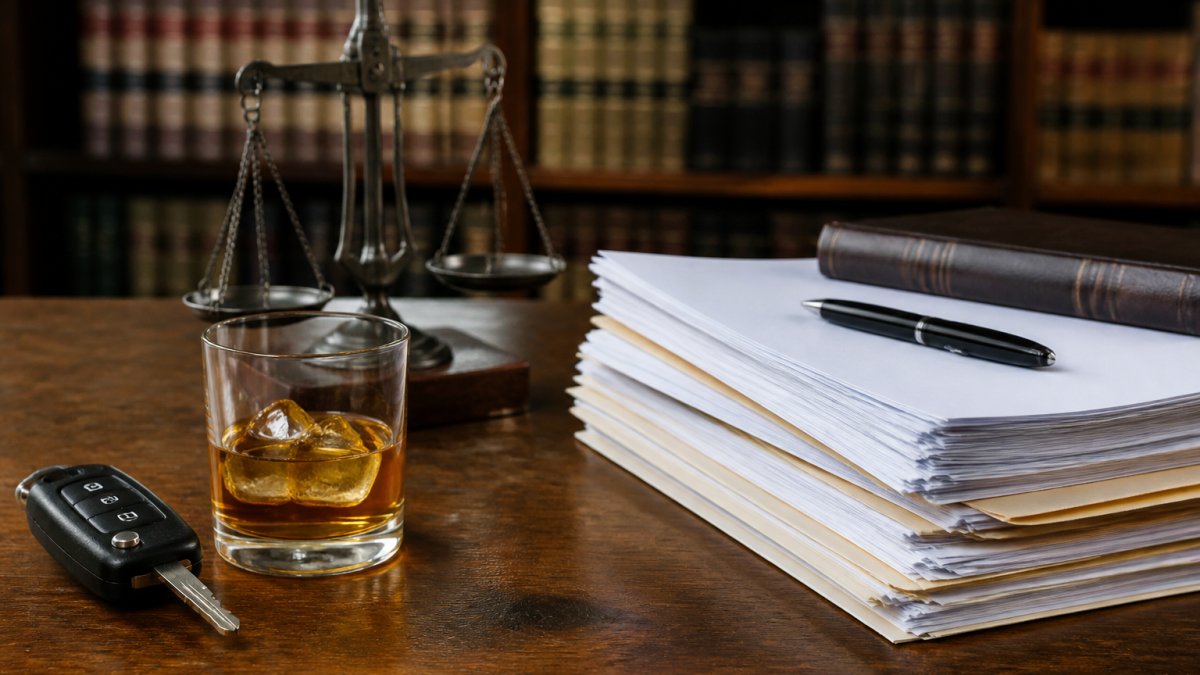
When you're facing a DUI charge, the biggest question isn't guilt or innocence, it's whether to fight a DUI case or accept a plea. (Source: National Highway Traffic Safety Administration (NHTSA) data)
Table of Contents
- The Core Decision: Fight a DUI Case or Accept a Plea
- Signs of a Weak DUI Case Worth Challenging
- DUI Evidence Challenges: What Can Be Disputed
- DUI Plea Deal vs. Trial: Weighing Your Options
- Financial and Personal Consequences: Beyond the Courtroom
- DUI Lawyer Cost and Value: When Professional Representation Pays Off
- Your Decision Framework: Questions to Ask Before Choosing
- Frequently Asked Questions
Last Updated: October 12, 2026
The Core Decision: Fight a DUI Case or Accept a Plea
The answer depends on three things: the strength of the evidence, what you can afford, and what you're willing to risk.
At Law Offices of Robert E. Ray, we've helped clients in Weld County and Northern Colorado make this choice.
A weak case is worth fighting; a strong case might still be worth negotiating. Know which category you're in before you commit.
Signs of a Weak DUI Case Worth Challenging
If your case shows these red flags, fighting might be your best option.
Police Procedure and Constitutional Violations
Police must follow specific rules when they stop and arrest you. Break those rules, and evidence can be thrown out, that's the law, not a technicality.
Common violations include:
- Stopping your vehicle without reasonable suspicion
- Conducting a search without proper consent or a warrant
- Failing to read your Miranda rights before questioning
A traffic stop requires reasonable suspicion. "You looked tired" doesn't count; "your car drifted once" might.
If the officer lacked probable cause or violated your rights, an experienced DUI attorney can file a motion to suppress, significantly weakening the prosecution's case.
Testing Reliability and Chain of Custody
Breathalyzer and blood tests aren't perfect, machines and procedures both err.
Questions that expose weak testing include:
- Was the breathalyzer calibrated recently?
- Did the officer follow the proper waiting period before administering the test?
- Was the blood sample properly stored and handled?
Chain of custody matters. If no one can prove who handled your blood sample at every step, a missing form or unclear handoff can undermine the prosecution's entire case.
Breathalyzers measure breath alcohol, not blood alcohol, and mouth alcohol, acid reflux, or medical conditions can skew results.
DUI Evidence Challenges: What Can Be Disputed
The prosecution's case rests on evidence. Weak evidence means a weaker case.
Field sobriety tests are notoriously unreliable.
Witness testimony can be challenged: could the witness actually see what they claim, from how far, with an unobstructed view?
Police reports aren't gospel. Officers make mistakes, misremember details, and may have bias, cross-examination can expose these weaknesses.
BAC results are numbers, but numbers can be wrong.
DUI Plea Deal vs. Trial: Weighing Your Options
Once you understand the evidence, you face a fork: negotiate or go to trial. The paths differ in cost, timing, certainty, and long-term consequences.
What a Plea Deal Actually Looks Like
A plea bargain is a negotiated exchange, usually on one of four axes:
- Charge reduction. The prosecutor amends the DUI to a lesser offense, most commonly reckless driving or a reduced DUI tier. This is the single most valuable concession because it changes what appears on a background check.
- Sentence recommendation. The charge stays, but the prosecutor agrees to recommend a specific sentence, often the statutory minimum.
- Diversion or deferred adjudication. Where available, the case is continued, you complete conditions, and the charge may be dismissed or not entered. Availability varies widely by court and by prior record.
What a plea does not do: erase the arrest or stop the administrative license action, which proceeds on its own timeline.
What Trial Actually Costs You
Trial is not just a strategy, it's a project with a budget and a calendar.
- Time. A contested DUI trial typically runs months from arraignment to verdict, and continuances are common. A negotiated resolution often closes in weeks.
- Money. Beyond base attorney fees, trial preparation can require expert witnesses (a breath-test or blood-test expert, sometimes a field-sobriety expert), independent lab testing of a retained blood sample, transcripts, and investigator time. These are billed separately from the flat fee in most firms.
- Exposure. If you lose at trial, you generally face the sentence for the original charge with no reduction, and courts are not obligated to reward you for going to trial. In some courts, the pretrial offer is better than anything available after conviction.
The Real Comparison
| Factor | Negotiated Plea | Trial |
|---|---|---|
| Outcome certainty | High | None until verdict |
| Typical timeline | Weeks | Months |
| Upfront cost | Lower | Higher (experts, prep) |
| Best-case result | Reduced charge or diversion | Dismissal or acquittal |
| Worst-case result | Conviction on reduced charge | Conviction on original charge |
| Record impact | Depends on charge | Clean if acquitted |
| License impact | Often still triggered | Depends on outcome |
A plea makes sense when the evidence is strong, the reduction meaningful, and the collateral consequences tolerable. Trial makes sense with a genuine suppression issue, a credible test-reliability challenge, or a consequence (job, license, immigration status) a conviction would destroy.
Questions to Ask Before You Choose
- What is the actual charge I would be pleading to, and how does it appear on a background check?
- Is diversion available in this court for someone with my record?
- What is the realistic sentencing range if I lose at trial?
Get answers in writing before you decide. The choice is yours, but it should be an informed one.
Financial and Personal Consequences: Beyond the Courtroom
A DUI conviction costs far more than fines and court fees.
Your license will be suspended, often for months. You might qualify for a restricted license to drive to work, but even that comes with conditions and costs. (Source: American Bar Association's recommendations on plea bargaining)
Your insurance rates will skyrocket.
Employment becomes harder. Many employers run background checks, and a DUI conviction appears on yours.
Your reputation suffers. In a small community, word spreads. Clients, colleagues, and neighbors will know.
A criminal record follows you. Housing, loan, and professional applications all ask about convictions, and you'll answer "yes" for years.
DUI Lawyer Cost and Value: When Professional Representation Pays Off
You can represent yourself in a DUI case. Many do. Most regret it.
DUI law is technical: breathalyzer calibration, constitutional law, police procedure, evidence rules, motions, cross-examination, and defense strategy.
An experienced DUI attorney knows the local judges and prosecutors.
An attorney can file suppression motions, challenge test results, negotiate better plea deals, and prepare you for trial if that's the right path.
The value of an attorney isn't just courtroom skill, it's judgment.
Professional representation is an investment in your future.
Your Decision Framework: Questions to Ask Before Choosing
Most articles tell you to "weigh your options." That's not a framework. Here's one you can use, built around the two tracks that run in parallel after a DUI arrest.

Track 1 vs. Track 2: Two Cases, Two Clocks
The criminal case and the administrative license action are separate proceedings with different decision-makers, burdens of proof, and, critically, deadlines.
- Criminal track. The prosecutor must prove the charge beyond a reasonable doubt. You have the right to counsel, the right to remain silent, and the right to trial. This track moves on the court's calendar.
- Administrative track. The state licensing agency acts on its own authority to suspend or restrict your driving privileges. The standard is typically lower (preponderance or substantial evidence), and the hearing is not a criminal trial. In many states you must request a hearing within a short window, often measured in days, not weeks, after your arrest, or you waive the challenge entirely.
The Four-Factor Framework
Score your case on four factors.
1. Evidence strength (how likely is a conviction?)
- Was the stop supported by reasonable suspicion?
- Was the arrest supported by probable cause?
- Was the chemical test properly administered, calibrated, and documented?
If two or more of these are shaky, the case is more fightable.
2. Cost of each path (what will you actually spend?)
Total cost typically includes:
- Attorney fees (flat fee for negotiation, often higher for trial)
- Court costs and filing fees
- Fines and statutory assessments
Trial adds expert witness fees, independent lab testing, and transcripts.
3. Collateral consequences (what does a conviction cost beyond the sentence?)
- Employment. Background checks, professional licensing boards, and jobs requiring driving or security clearance are the most exposed.
- Professional licenses. Nurses, teachers, realtors, attorneys, and commercial drivers may face separate disciplinary action.
- Immigration. A DUI can affect visa status, naturalization, and admissibility in ways that are not obvious from the criminal sentence alone. Consult an immigration attorney if this applies.
4. Risk tolerance and goals (what outcome are you actually trying to protect?)
- If the goal is keeping a job or license, a reduced charge may be worth more than a trial gamble.
- If the goal is a clean record and the evidence is weak, trial or a suppression motion may be the only path that gets there.
- If the goal is speed and certainty, a negotiated resolution usually wins.
How to Use the Framework
Score each factor, then ask your attorney: "Given these facts, what is the best realistic outcome, and the cheapest reliable path to it?" If it's a suppression motion, that comes first, it can end the case before plea or trial matters. If it's a plea, negotiate the charge, not just the sentence. If it's trial, budget honestly.
Verify Your Local Rules
DUI procedure, plea options, license consequences, and deadlines vary by state and county. Before relying on anything here, confirm:
- The administrative hearing request deadline in your state
- Whether diversion or deferred adjudication is available in your court
- The sentencing range for your charge and any enhancements
State licensing agency hearing request procedures
An experienced DUI attorney will help you answer these questions and give honest advice about your case's strength. The Law Offices of Robert E. Ray has guided clients through this decision for decades. We know the local court system, the judges and prosecutors. When you're ready to discuss your situation, we're ready to listen.
Frequently Asked Questions
What are the signs that a DUI case is weak?
A weak DUI case often involves procedural errors during the traffic stop, such as lack of probable cause or improper administration of field sobriety tests. Breathalyzer or blood test irregularities, including improper calibration, contamination, or violations of chain of custody, also weaken prosecution evidence. Inconsistent police reports, dash camera footage contradicting officer testimony, and failure to read Miranda rights are additional red flags. An experienced DUI attorney can identify these vulnerabilities and challenge the evidence in court.
Should I fight a DUI case or accept a plea deal?
This depends on the strength of evidence against you, potential penalties, and your personal circumstances. If evidence is weak or procedurally flawed, fighting may result in dismissal or acquittal. If evidence is strong, a plea deal may reduce charges to reckless driving and minimize jail time and license suspension. Consider your career impact, financial resources, and risk tolerance. A DUI attorney can evaluate your specific case and help you weigh the realistic outcomes of each path.
How much does it cost to fight a DUI case versus accepting a plea?
Costs vary significantly based on case complexity, local court procedures, and whether the case goes to trial. Generally, accepting a plea costs less upfront than fighting through trial, which involves expert witnesses, motions, and courtroom time. However, a conviction carries long-term costs: fines, mandatory programs, increased insurance rates, and potential employment consequences. A DUI attorney can discuss fee structures and help you understand the total financial impact of each option before you decide.
What happens if I take my DUI case to trial and lose?
If you go to trial and are convicted, you face the full range of penalties: jail time, fines, mandatory DUI education programs, license suspension, probation, and a permanent criminal record. A conviction also affects employment, professional licenses, insurance rates, and housing applications. However, trial also offers the chance of acquittal if the prosecution cannot prove guilt beyond reasonable doubt. An attorney can assess the strength of evidence and help you understand realistic trial outcomes before you decide whether the risk is worth taking.





