
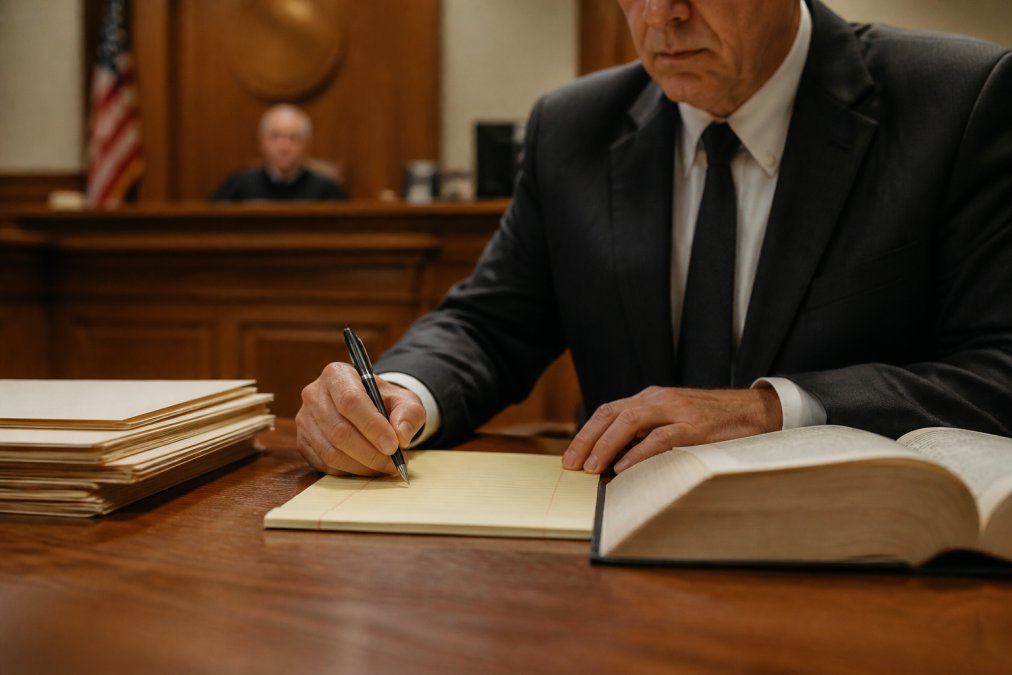
Choosing aggressive criminal defense in Colorado is not about theatrics, raised voices, or courtroom grandstanding. It means a lawyer who prepares every case as if it will go to trial, files every motion that could suppress damaging evidence, and refuses the first plea offer simply because it is convenient.
Table of Contents
- What Aggressive Criminal Defense Actually Means in Colorado Courtrooms
- Qualities of a Top Criminal Defense Lawyer: What to Look For
- Why the Importance of Local Courtroom Experience in Weld County Decides Your Case
- Questions to Ask a Criminal Defense Attorney During Consultation
- Aggressive Defense vs. Unethical Conduct: Drawing the Line
- Trial Success Metrics: How to Measure a Lawyer's Record
- Making Your Final Choice: A Vetting Checklist
- Conclusion
- Frequently Asked Questions
Last Updated: September 9, 2026
What Aggressive Criminal Defense Actually Means in Colorado Courtrooms
At the Law Offices of Robert E. Ray, we have practiced this exact style of defense in Weld County since 1975. Colorado judges and prosecutors respond to preparation, not volume, an aggressive approach means a prosecutor knows your lawyer will use the rules of evidence, challenge weak testimony, and demand proof of every element beyond a reasonable doubt.
Qualities of a Top Criminal Defense Lawyer: What to Look For
The qualities of a top criminal defense lawyer go far beyond a polished website or confident handshake. You need someone with a track record of taking cases to verdict, because prosecutors offer better deals to defense attorneys they fear losing to at trial.
Look for these specific markers when evaluating counsel:
- Decades of actual courtroom experience, not just bar admission
- A professional reputation noted by local media or legal peers
- Willingness to explain strategy clearly and answer your questions
- Familiarity with the specific courthouse where your case will be heard
- Communication in your preferred language, if needed
A lawyer who tries cases regularly understands that the best plea bargain is negotiated from a position of strength. If the prosecution knows your attorney is prepared to pick a jury, the calculus changes immediately.
Why the Importance of Local Courtroom Experience in Weld County Decides Your Case
The importance of local courtroom experience in Weld County cannot be overstated. Courts operate on relationships, unwritten preferences, and the specific tendencies of individual judges. An attorney who has spent decades in these courthouses knows which arguments resonate, which judges require stricter adherence to procedure, and how local prosecutors typically structure their cases.

This local knowledge shapes strategy. A seasoned Weld County attorney anticipates filing deadlines, understands the pre-trial conference culture, and has established credibility with the court staff who manage the docket. When a lawyer is known in the building, their representations carry weight; when unknown, every request faces more scrutiny.
According to the Colorado Judicial Branch guide on criminal case procedures, the pre-trial phase involves motion practice and hearings that can determine the outcome before a jury is ever seated. An attorney who knows how to navigate these local procedures protects your rights at every stage.
Questions to Ask a Criminal Defense Attorney During Consultation
The questions to ask a criminal defense attorney during consultation should reveal how they actually operate. This meeting is your chance to vet whether the lawyer matches your needs, the most effective consultations are a two-way diagnostic, auditing their preparation, caseload, and theory of your case.
To get beneath the surface, organize your questions into three distinct buckets: Track Record, Case Strategy, and Operational Reality.
Track Record Questions (Probing Verdicts, Not Just Wins)
- How many of your cases in the last 24 months actually went to a jury trial in Weld County, and what was the breakdown of verdicts versus last-minute pleas?
- Of your trial losses, what was the most common reason, evidentiary rulings, witness credibility, or jury selection? A candid answer here tells you more than a perfect record ever could.
- How many of your cases were dismissed outright at the preliminary hearing or on a suppression motion? This number reveals whether they use pre-trial procedure aggressively, not just trial theatrics.
Case Strategy Questions (Testing Their Theory)
- Based on what I have told you, what is the single weakest point in the prosecution's case, and what is your first move to exploit it?
- What specific motions will you file in my case, a motion to suppress, a motion to dismiss for lack of probable cause, a motion in limine? If they cannot name at least two, they are not thinking about your case yet.
- If we go to trial, what is your voir dire strategy for this type of charge in this county? How do you plan to seat a jury favorable to my defense?
Operational Reality Questions (Who Does the Work)
- Who will actually appear with you at the arraignment, the status conferences, and the pre-trial hearings? Many firms send a junior associate to handle the routine appearances while the named partner only shows up for trial.
- How many active cases are you currently carrying? If the number is high, your case may not get the attention it deserves during the critical early stages.
- How do you handle communication during non-business hours, and what is your typical response time for a client question about a court notice or a call from a prosecutor?
The answers tell you whether you are hiring the person in the room or a brand name. A lawyer who deflects questions about trial experience or communication habits is showing you how they will handle your case. But also trust the lawyer who pushes back on your assumptions, tells you your expected defense is weak, and gives you a realistic picture of what the prosecution can prove, that candor is the foundation of an aggressive defense, meaning they are thinking about the evidence, not just your comfort.
A truly aggressive defense attorney will use the consultation to start building your defense, asking about the circumstances of your arrest, the witnesses involved, and any weaknesses in the police report. If they only answer your questions and ask none of their own, they are treating this as a sales pitch, walk away.
Use this session to gauge whether the lawyer views your case as a file to manage or a battle to win. The right attorney will leave you with a clear sense of their plan, a realistic assessment of the risks, and a feeling that they are already fighting for you.
Aggressive Defense vs. Unethical Conduct: Drawing the Line
A common fear is that aggressive defense crosses into unethical territory. It does not. Zealous advocacy operates strictly within the bounds of the Colorado Rules of Professional Conduct, which require lawyers to act with diligence while maintaining candor toward the tribunal. (Source: American Bar Association's guidelines on effective legal representation)
The line is clearer than most people think. Filing every legitimate motion, cross-examining witnesses aggressively, and challenging flawed evidence is aggressive defense. Misrepresenting facts to the court, coaching witnesses to lie, or violating discovery rules is misconduct. The Colorado Rules of Professional Conduct define the boundaries of proper advocacy, and a skilled attorney operates right up to that line without crossing it.
Trial Success Metrics: How to Measure a Lawyer's Record
Measuring a lawyer's effectiveness requires looking beyond the number of cases won. A dismissal before trial, a charge reduced to a lesser offense, and an acquittal at trial all count as successes reflecting the same underlying skill. But to truly evaluate a trial attorney, you need to understand the different types of trials and what each outcome actually proves.
Jury Trials vs. Bench Trials: Why the Distinction Matters
In Colorado, a jury trial means 12 citizens decide your fate; a bench trial means a single judge does. These are fundamentally different skill sets. Jury trials demand mastery of storytelling, voir dire, and simplifying complex evidence for laypeople. Bench trials require deep understanding of legal procedure, evidentiary rules, and persuading a judge immune to emotional appeals.
When you ask about a trial record, ask for the split between jury and bench trials. A lawyer with 50 bench trial wins but only 2 jury trials may not be right for a case where the prosecution's evidence is strong but the human story is on your side. Conversely, if your case hinges on a technical legal issue, a faulty warrant, a botched chain of custody, deep bench trial experience may be more valuable.
What a Dismissal Actually Proves
A dismissal before trial is often the best possible outcome, but not all dismissals are equal. A dismissal at the preliminary hearing, where the prosecution must show probable cause, demonstrates the lawyer successfully attacked the sufficiency of the evidence. A dismissal after a successful motion to suppress means the lawyer found a constitutional violation in how the evidence was obtained. Both require different skills: the first demands a sharp understanding of the elements of the crime; the second demands mastery of Fourth Amendment jurisprudence and effective cross-examination of police officers.
Ask the lawyer to explain the procedural posture of their dismissals. If they cannot articulate whether their dismissals came at the preliminary hearing, on a suppression motion, or because the complaining witness failed to appear, they may be inflating their record.
The Verdict Itself: Acquittals, Hung Juries, and Convictions
An acquittal is a clean win, but a hung jury, where the jury cannot reach a unanimous verdict, is often a strategic victory as well. In Colorado, a hung jury typically results in a mistrial, and the prosecution must decide whether to retry; most will not unless the evidence is overwhelming or the victim is particularly insistent. A lawyer who can produce hung juries in difficult cases demonstrates an ability to create reasonable doubt in at least one juror's mind.
A conviction, however, is not always a failure. The question is what the lawyer did after the verdict, file a motion for a new trial, preserve issues for appeal, or argue for a mitigated sentence, demonstrating commitment that extends beyond the verdict.
The Greeley Factor: Local Courtroom Reputation
The Greeley Tribune has noted that a respected local defense attorney "gets results" and that clients "walk away winners" much of the time in Weld County courts. This professional recognition matters because it comes from observing actual courtroom performance, not self-promotion.
When you evaluate a record, ask about outcomes in cases similar to yours. Drug charges, DUI allegations, and white-collar matters each require different defense strategies; a lawyer who succeeds across these areas demonstrates adaptable trial skills. Also ask about the specific judges who presided over their trials, a lawyer who has tried cases before the judge assigned to yours has a distinct advantage, knowing their evidentiary rulings, tolerance for certain arguments, and jury instructions.
Finally, be wary of lawyers who quote a "win rate" without context. A 95% win rate may mean they only take easy cases or pressure every client into a plea deal. A 70% win rate with a history of taking difficult cases to trial may be far more valuable. The metric that matters is not the percentage, it is the willingness to fight when the odds are against you and the skill to win when the case is close.
Making Your Final Choice: A Vetting Checklist
Before you hire anyone, run them through this final checklist to confirm you are making the right decision.
- Verified trial experience in the specific Colorado county where your case is filed
- Clear communication about strategy, fees, and potential outcomes
- A professional reputation confirmed by media coverage or peer references
- Direct access to the attorney who will handle your case, not a referral service
- Comfort level with their courtroom style and willingness to fight
The American Bar Association's guide on how to choose a lawyer recommends interviewing multiple candidates and trusting your judgment about who understands your situation best. Your freedom and reputation depend on this choice, so take the time to make it carefully.
Conclusion
Facing criminal charges in Colorado means confronting a system with vast resources and experienced prosecutors. The choice of who stands beside you determines how that system treats you. An attorney with genuine courtroom experience, local knowledge, and a reputation for fighting hard provides the strongest possible defense.
At Law Offices of Robert E. Ray, we have defended clients in Weld County since 1975 with exactly that approach. Our reputation as a bulldog in the courtroom, noted by The Greeley Tribune, reflects decades of preparing every case for trial and getting results for clients facing DUI, drug, white-collar, and sex crime charges. Bilingual services are available.
Contact us today to discuss your case and build the strongest possible defense.
Frequently Asked Questions
What does it mean for a criminal defense attorney to be aggressive?
Aggressive criminal defense means the lawyer actively challenges the prosecution's evidence, files pre-trial motions to suppress unlawful searches, and pushes for a trial when the case warrants it. It does not mean being rude or combative. True aggression is strategic: it forces the district attorney to prove every element of the charge. An aggressive attorney prepares each case as if it will go to a jury, which often leads to better plea offers because the prosecution knows the lawyer will not fold.
What questions should I ask during a criminal defense consultation?
Ask how many jury trials the attorney has actually handled in Weld County, who will be handling your case day to day, and how the attorney communicates with clients. Ask about their experience with charges like yours, whether they have local relationships with the district attorney's office, and what their track record looks like. You should also ask what the strategy would be for your specific facts. These questions reveal whether you are hiring a seasoned trial attorney or a lawyer who plans to negotiate a quick plea.
How does local courtroom experience impact a criminal defense case?
An attorney who works in Weld County courts every day knows the local judges, prosecutors, and court staff. That familiarity matters: they understand how specific judges rule on pre-trial motions, what evidence the local district attorney typically brings, and which arguments land well. This local knowledge shapes smarter legal strategies and more accurate predictions about case outcomes. A lawyer from outside the area starts at a disadvantage, learning the local rules and personalities while your case is already moving.





