
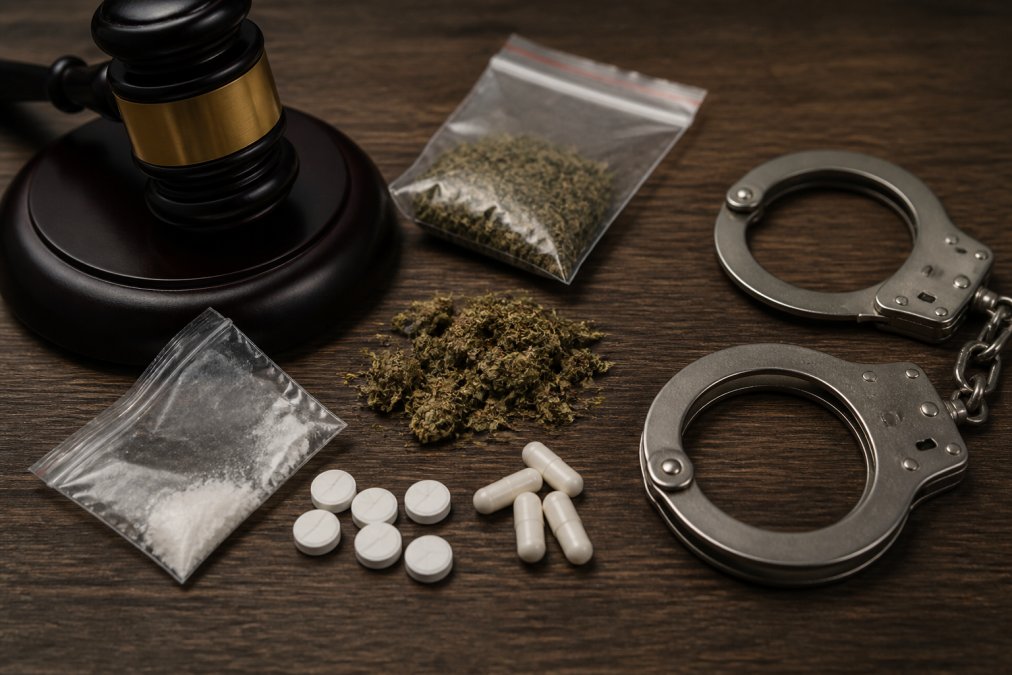
Drug possession charges in Colorado fall into two distinct categories that fundamentally shape how prosecutors build their case and what penalties you'll face. Understanding the difference between actual and constructive possession is critical because it determines whether the state can prove you knowingly controlled a controlled substance.
Table of Contents
- What Constitutes Drug Possession Under Colorado Law
- Schedule I and Schedule II Drug Classifications
- Misdemeanor vs. Felony Drug Possession Charges
- Penalties and Sentencing for Drug Possession
- Drug Possession Defense Strategies
- Consequences of Drug Possession Convictions
- Recent Legislative Changes Affecting Drug Possession Laws
- Conclusion
Last Updated: August 29, 2026
What Constitutes Drug Possession Under Colorado Law
Actual possession means you physically held the drug on your person. Your hand wrapped around it. It was in your pocket, your bag, or your vehicle within arm's reach. This is straightforward to prove and difficult to defend against.
Constructive possession is where the legal landscape gets complicated. You don't have to physically touch the drug. If law enforcement can demonstrate you had knowledge of the drug's presence and the ability to exercise control over it, that's enough. A baggie in your nightstand drawer, cocaine in a car you own, or pills in a jacket hanging in your closet can all result in possession charges even if they weren't in your hands at the moment of arrest.
Actual vs. Constructive Possession
The prosecution must establish three elements to prove constructive possession. First, they need to show you knew the drug existed. Second, they must demonstrate you had the ability to control it. Third, they must prove you intended to control it. All three must be present, knowledge alone isn't enough.
This is where a skilled criminal defense strategy becomes essential. Prosecutors often overreach on constructive possession cases. Finding a baggie in a shared apartment doesn't automatically mean you knew about it or controlled it. A passenger in a car where drugs are found in the glove compartment may not have constructive possession simply because they were present. The Law Offices of Robert E. Ray has successfully challenged constructive possession charges by establishing reasonable doubt on one or more of these elements.
Controlled Substance Classifications
Colorado law organizes drugs into schedules based on their potential for abuse and accepted medical use. This classification system determines which charges apply and what penalties follow. Schedule I drugs have the highest abuse potential and no accepted medical use (dea.gov). Schedule II drugs also carry high abuse potential but have limited medical applications (dea.gov).
The specific substance matters enormously. Possession of a Schedule I drug like heroin triggers different charges than possession of a Schedule IV prescription medication obtained without a valid prescription. The difference can mean years in prison versus probation and treatment.
Schedule I and Schedule II Drug Classifications
Schedule I substances are treated as the most dangerous drugs under Colorado law. Heroin, LSD, psilocybin mushrooms, MDMA, and methamphetamine all fall into this category. The state assumes these drugs have no legitimate medical purpose and extreme potential for abuse.
Schedule II drugs include cocaine, methamphetamine (when manufactured), and prescription opioids like oxycodone and hydrocodone when possessed without a valid prescription. These drugs do have accepted medical uses under strict supervision, but that distinction matters little if you're caught with them illegally.
The distinction between schedules shapes sentencing guidelines significantly. A first-time possession charge for a Schedule I drug carries different consequences than the same charge for a Schedule II substance. Understanding where your specific drug falls within this classification system is fundamental to evaluating your legal exposure.

Misdemeanor vs. Felony Drug Possession Charges
Whether you face a misdemeanor or felony charge hinges on the amount of drug involved and your prior criminal history. Colorado distinguishes between simple possession and possession with intent to distribute based on quantity thresholds.
A misdemeanor drug possession charge typically involves smaller amounts and results in less severe penalties. You might face jail time measured in months rather than years. However, a misdemeanor conviction still creates a permanent criminal record that affects employment, housing, and professional licensing.
Felony charges apply when you possess larger quantities or when you have prior drug convictions. A felony conviction means state prison time, not county jail. It means losing certain civil rights. It means a permanent mark on your record that follows you for decades.
The 4-Gram Threshold Explained
Colorado law uses a critical threshold: four grams (leg.colorado.gov). This amount serves as a dividing line for many drug possession charges, though it applies differently depending on the substance.
For certain drugs, possessing less than four grams results in a misdemeanor charge. Exceeding four grams typically elevates the charge to a felony. This threshold doesn't apply uniformly across all controlled substances, some have different quantity triggers, but the four-gram mark represents a key legal boundary prosecutors and defense attorneys watch closely.
The prosecution will argue that possessing more than four grams suggests intent to distribute rather than personal use. Your defense strategy must challenge this inference. Possession of four grams doesn't automatically prove you intended to sell the drug. A person can use drugs heavily and still possess amounts that exceed this threshold for personal consumption.
Penalties and Sentencing for Drug Possession
Penalties for drug possession in Colorado vary dramatically based on the schedule, the amount, and your criminal history. A first-time misdemeanor possession conviction might result in probation and mandatory drug treatment. A felony conviction can mean years in prison.
The mandatory sentencing guidelines in Colorado specify minimum and maximum sentences based on the offense level. A Class 4 felony for drug possession carries a sentence range that differs from a Class 5 felony. Judges have discretion within these ranges, but they cannot go below the mandatory minimum established by statute.
Probation often accompanies sentencing for first-time offenders. You'll be required to submit to drug testing, attend treatment programs, and report regularly to a probation officer. Violating probation conditions can result in incarceration for the remainder of your sentence.
Rehabilitation and treatment are increasingly emphasized in Colorado sentencing. Courts recognize that incarceration alone doesn't address the underlying addiction driving many possession charges. Your sentencing may include mandatory participation in substance abuse treatment, anger management, or other rehabilitative programs.
Drug Possession Defense Strategies
Defending against a drug possession charge requires attacking the state's evidence at every level. The prosecution must prove beyond a reasonable doubt that you knowingly possessed a controlled substance. Any weakness in their case becomes your opportunity.
Search and Seizure Rights
The Fourth Amendment protects you against unreasonable searches and seizures. Law enforcement cannot search your person, your vehicle, or your home without a warrant or valid legal justification. Many drug possession cases are won or lost based on whether the search that discovered the drugs was constitutional.
An officer who stops your vehicle must have reasonable suspicion of criminal activity. They cannot search your car based on a hunch. If they lack that reasonable suspicion, any drugs found during an illegal search are inadmissible in court. This exclusionary rule means the prosecution cannot use illegally obtained evidence against you.
Your home receives the strongest Fourth Amendment protection. Police need a warrant signed by a judge before entering your residence to search for drugs. Consent searches are valid only if you genuinely consent, not if officers intimidate or coerce you into allowing the search. Understanding your rights during police encounters is essential. You have the right to refuse consent to a search. You have the right to remain silent. You have the right to speak with an attorney before answering questions.
First-Time Offender Programs and Diversion
Colorado offers programs designed to help first-time drug offenders avoid conviction and incarceration. Deferred judgment programs allow you to plead guilty while reserving the right to withdraw that plea if you successfully complete probation and treatment requirements. Upon successful completion, the charges are dismissed and you can legally say you were never convicted.
Pre-trial diversion programs work similarly but occur before formal charges are filed. If you qualify, you enter a diversion program, complete the requirements, and the charges never proceed to trial. These programs require drug treatment, regular drug testing, and probation supervision, but they offer the possibility of avoiding a permanent criminal record.
Eligibility for these programs depends on factors including your prior criminal history, the specific drug involved, and the amount possessed. First-time offenders with no violent history and possession of small amounts have the strongest cases for diversion. The Law Offices of Robert E. Ray works to position clients for these alternatives, recognizing that treatment and rehabilitation serve everyone better than incarceration.
Consequences of Drug Possession Convictions
A drug possession conviction creates ripples through your life that extend far beyond the courtroom. The immediate legal consequences are only the beginning.

Collateral Consequences Beyond Sentencing
Employment becomes significantly harder with a drug conviction on your record. Many employers conduct background checks and automatically disqualify candidates with drug convictions. Professional licenses in fields like healthcare, law, education, and finance are jeopardized or revoked entirely. A nurse, teacher, or attorney with a drug conviction faces losing their career.
Housing discrimination follows you. Landlords routinely deny rental applications from people with drug convictions. You may be excluded from public housing assistance. The conviction becomes a permanent barrier to stable housing.
Educational opportunities close. Financial aid eligibility is affected. Graduate school admissions committees review criminal records. Scholarships become unavailable.
Professional certifications and licenses are affected. A commercial driver's license can be suspended. Professional licenses in regulated fields are revoked. Bonding requirements for certain jobs become impossible to meet.
Child custody and visitation rights are jeopardized. Family courts consider drug convictions when determining custody arrangements. You may lose custody of your children or face restrictions on visitation.
Immigration consequences are severe for non-citizens. A drug conviction can trigger deportation proceedings. Permanent residents face removal from the country. The conviction can bar you from ever becoming a citizen.
Sealing and Expungement Options
Colorado law provides mechanisms to seal or expunge criminal records under certain circumstances. Expungement removes the record entirely, as if the conviction never happened. Sealing restricts access to the record but doesn't erase it completely.
For misdemeanor drug possession convictions, you may petition to seal the record after a waiting period. For felony convictions, the waiting period is longer, but sealing is still possible. Some convictions can be expunged entirely if you meet specific criteria.
The timing matters. You cannot immediately petition to seal a conviction. The law specifies waiting periods that vary based on the offense. Once you're eligible, an attorney can file the petition and argue for sealing based on rehabilitation, time passed, and the impact of the conviction on your life.
Successfully sealing your record removes many collateral consequences. You can legally answer "no" when asked if you have a criminal conviction. Employers and landlords conducting background checks won't see the sealed conviction. The relief is substantial, but you must know your eligibility and act when the timing is right.
Recent Legislative Changes Affecting Drug Possession Laws
Colorado's approach to drug possession has shifted in recent years, reflecting changing attitudes toward drug policy and criminal justice reform. These legislative changes affect how cases are prosecuted and what options are available to defendants.
Defelonization efforts have reduced penalties for certain drug possession offenses. Possession of smaller amounts that previously triggered felony charges now result in misdemeanor charges. This shift reflects recognition that mass incarceration for drug possession hasn't solved the underlying addiction crisis.
Mandatory minimum sentencing has been reduced for some drug offenses. Judges now have more discretion in sentencing, allowing them to consider individual circumstances and recommend treatment-focused alternatives to incarceration.
Drug court expansion has created more opportunities for offenders to enter treatment-based programs instead of facing traditional prosecution. These specialized courts recognize addiction as a public health issue rather than purely a criminal matter.
The Law Offices of Robert E. Ray stays current with these legislative changes because they create new opportunities for clients. A charge that would have been a felony five years ago might be prosecutable as a misdemeanor today. Recent legislative shifts can affect sentencing ranges and diversion eligibility. Understanding how current law applies to your specific situation requires knowledge of both the statutes and recent amendments.
Facing drug possession charges in Colorado is serious, but you don't face it alone. The difference between a conviction that derails your life and an outcome that preserves your future often comes down to the quality of your legal defense. The Law Offices of Robert E. Ray has spent decades defending clients facing drug charges in Northern Colorado courts. Our team understands how to challenge the state's evidence, negotiate for diversion programs, and fight for outcomes that protect your freedom and your future. Contact us today for a consultation about your case.
Frequently Asked Questions
What is the difference between actual and constructive possession under Colorado drug possession laws?
Actual possession means you physically hold the controlled substance. Constructive possession means you have knowledge of the substance and the ability to control it, even if you don't physically hold it. For example, drugs found in a car you own or a home you rent can constitute constructive possession. Both types carry criminal penalties under Colorado law, making the distinction important for understanding how prosecutors can charge you.
What are the penalties for Schedule I and Schedule II drug possession in Colorado?
Penalties depend on the amount. For Schedule I and II substances, possession of less than 4 grams is typically a misdemeanor, while 4 grams or more is a felony. Misdemeanor convictions can result in up to 12 months in jail and fines. Felony convictions carry mandatory sentencing guidelines that increase with the amount possessed. The specific penalties vary based on your criminal history and the substance involved, making legal counsel essential.
Can a drug possession conviction be sealed or expunged in Colorado?
Yes. Under Colorado law, you may petition to seal or expunge a drug possession conviction under certain conditions. First-time offenders and those who complete diversion programs have better chances. Sealing removes the conviction from public view, while expungement destroys the record entirely. The process requires filing a petition and meeting specific eligibility requirements. An experienced criminal defense attorney can evaluate your case and guide you through this process.
What legal defenses are available for drug possession charges?
Common defenses include challenging the legality of the search that found the drugs (Fourth Amendment violations), questioning chain of custody, proving lack of knowledge of the substance, and demonstrating you lacked the ability to control it (constructive possession cases). Some cases may involve challenging the substance identification or arguing entrapment. Each case is unique, and your defense strategy depends on the specific circumstances and evidence involved.
How does possession with intent to distribute differ from simple possession?
Possession with intent to distribute is a more serious charge that requires prosecutors to prove not only that you possessed a controlled substance but also that you intended to sell, distribute, or transfer it. Evidence like large quantities, scales, baggies, and text messages can support this charge. Penalties for intent to distribute are significantly harsher than simple possession, often resulting in felony convictions with mandatory minimum sentences.
What collateral consequences can a drug possession conviction create beyond jail time?
A conviction can affect employment, professional licenses, housing, student financial aid, and custody rights. Many employers conduct background checks and may deny employment based on drug convictions. Professional licenses in healthcare, law, and other fields may be suspended or revoked. Housing discrimination is common, and you may lose eligibility for federal student loans. These long-term impacts make securing skilled legal defense critical to protect your future.
This article was written using GrandRanker