
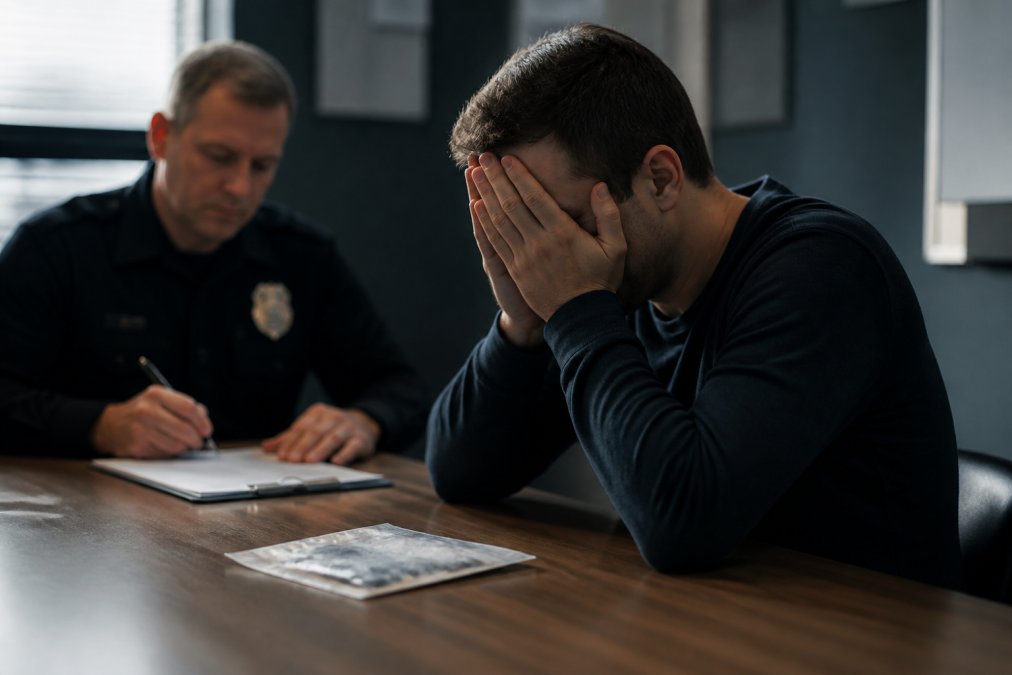
Being falsely accused of a crime is a nightmare thousands face each year, and for the falsely accused Colorado residents often find knowing what to do next overwhelming. At the Law Offices of Robert E. Ray, we have defended clients against wrongful accusations since 1975, and the first 48 hours matter more than most people realize.
Table of Contents
- Immediate Steps to Take After a False Accusation
- Understanding the False Reporting of a Crime Colorado Statute
- How to Find Out if You Have a Warrant in Colorado
- Gathering and Preserving Evidence to Defend Yourself
- Hiring a Criminal Defense Attorney in Greeley
- How a Defense Attorney Challenges False Accusations in Court
- Protecting Your Record, Career, and Mental Health
- Frequently Asked Questions
Last Updated: September 16, 2026
Immediate Steps to Take After a False Accusation

Exercise Your Right to Remain Silent
The single most important step is to say nothing to law enforcement beyond identifying yourself. You have a constitutional right to remain silent, and anything you say can be used against you. Invoke that right clearly and ask for an attorney before answering questions.
Write Down Everything You Remember
Memory fades fast. Within hours of a wrongful accusation, write down names, times, locations, what was said, who was with you, and any messages exchanged. This contemporaneous record becomes a foundation your attorney can build on.
Understanding the False Reporting of a Crime Colorado Statute
Colorado law treats deliberately false crime reports as a criminal act, not just a personal grievance. The Colorado Revised Statutes, false reporting provisions set out the offense and its consequences, and understanding this statute gives falsely accused people a path to fight back. We have used these provisions to shift the pressure onto accusers who fabricate claims.
What Counts as False Reporting Under Colorado Law
False reporting occurs when someone knowingly tells law enforcement about a crime that did not happen or identifies a person who was not involved. A mistaken report is not a crime; a deliberate lie is, and prosecutors must show the accuser intended to deceive.
Penalties and Civil Remedies for False Reporting
Penalties scale with the seriousness of the false report, from misdemeanor charges to felony exposure. Separately, a person harmed by a fabricated accusation may pursue civil claims for defamation, slander, libel, or malicious prosecution, recovering damages even when criminal charges against the accuser are not filed.
| Accusation Type | Possible Criminal Charge | Civil Remedy Available |
|---|---|---|
| Minor false report | Misdemeanor | Defamation claim |
| Serious felony allegation | Felony exposure | Malicious prosecution |
| False domestic violence claim | Misdemeanor or felony | Defamation and damages |
| False sexual assault claim | Felony exposure | Civil lawsuit |
How to Find Out if You Have a Warrant in Colorado
Knowing your warrant status early prevents an embarrassing or dangerous arrest at work, home, or during a traffic stop. If a false accusation may have led to a warrant, checking official records is the fastest way to confirm it.
Checking Court Records and Law Enforcement Databases
Start with the court clerk in the county where the accusation originated. Many Colorado courts publish case searches online, and the Colorado Judicial Branch case search lets you look up filings by name. You can also contact the sheriff's office or local police records division directly and ask whether a warrant exists.
What to Do If a Warrant Is Active
An active warrant does not improve with time. Call a defense attorney before turning yourself in; an attorney can arrange a controlled surrender, request a bond hearing, and appear with you.
Gathering and Preserving Evidence to Defend Yourself
Evidence disappears quickly, and digital records are the first to go. Text threads get deleted, social posts get edited, and location history purges on its own schedule. Preserving what exists now, in a form a court will accept, is one of the most valuable things you can do.
Digital Evidence: Texts, Social Media, and Location Data
Screenshot every relevant message and back it up to a second device or cloud account. Export location history from your phone and connected apps, and save call logs, voicemails, and emails. Do not delete anything, even content that feels damaging; opposing counsel can argue deletion was an attempt to hide evidence.
Witness Statements and Documentation
Write down the names and contact information of anyone who can confirm your whereabouts or the accuser's motive. Ask willing witnesses to write and date their own account in their own words, and keep a running timeline. Receipts and badge logs can also corroborate your story.
Hiring a Criminal Defense Attorney in Greeley
Hiring a criminal defense attorney in Greeley early changes the trajectory of a false accusation case. An experienced attorney can intervene before charges are filed, communicate with investigators, and prevent small missteps from becoming permanent problems. At the Law Offices of Robert E. Ray, we have defended clients in Weld County courts for decades.
What to Look for in a Defense Lawyer
Look for a lawyer with actual trial experience, not just plea negotiation. Ask how many cases they have taken to a jury, and check whether they practice in the county where your case sits; a local attorney knows the judges and prosecutors.
Questions to Ask Before You Hire
- How many false accusation cases have you handled?
- Will you personally appear at every hearing?
- What is your fee structure, and what does it cover?
- How quickly do you return client calls?
- Do you offer services in Spanish if needed?
How a Defense Attorney Challenges False Accusations in Court
A false accusation rarely collapses on its own. It gets dismantled through procedure: motions that narrow or kill the case before trial, discovery that exposes inconsistencies, and a defense theory built from the record. Understanding the machinery helps you judge whether your attorney is applying pressure or just waiting.
The Pretrial Motion Stage
Long before a jury is empaneled, your attorney can file motions shaping what the prosecution may present:
- Motion to dismiss under Colorado Rule of Criminal Procedure 12(b), arguing the charging document fails to state an offense or that the prosecution lacks probable cause.
- Motion to suppress evidence obtained through an unlawful stop, search, or interrogation, which can gut a case built on a coerced statement.
- Motion for a bill of particulars, forcing the prosecution to specify the exact conduct, date, and location it alleges, a step that frequently exposes a shifting or vague accusation.
- Motion in limine, asking the court to exclude prejudicial evidence before trial, including prior bad acts offered only to smear your character.
The Discovery Process in a Criminal Case
Discovery is where false accusations most often fall apart. Under Colorado Rule of Criminal Procedure 16, the prosecution must disclose the evidence it intends to use, including police reports, witness statements, recorded interviews, forensic results, and any exculpatory material under Brady v. Maryland. Your attorney's job is to read that material against the accuser's account.
What to look for in discovery:
- Inconsistent statements. An accuser who told patrol officers one version and detectives another has handed the defense a cross-examination theme.
- Timeline gaps. Text messages, call logs, and GPS data often contradict the alleged window of events.
- Missing physical evidence. No injuries, no forensic link, no corroborating witness, the absence matters, and your attorney should document it.
- Investigative shortcuts. Officers who never interviewed obvious witnesses or never tested available evidence create openings on cross.
Why Early Defense Changes the Trajectory
The National Registry of Exonerations has documented for years that false or mistaken accusations are a leading contributor to wrongful convictions. The lesson is not that every case ends in exoneration, it is that the cases that end well usually do so because a defense attorney got involved before charges hardened.
Protecting Your Record, Career, and Mental Health
For the falsely accused Colorado, a false accusation does not end when the case does. It lingers in background-check databases, in a supervisor's memory, and in your own head at 3 a.m. The three fronts, record, career, and mental health, must be worked in parallel.
Expungement and Record Sealing
Colorado separates sealing (making a record inaccessible to most employers and the public) from expungement (a narrower remedy, largely reserved for certain juvenile and drug-related dispositions). For an adult falsely accused, sealing is usually the realistic goal.
- No charges filed. Arrest records can generally be sealed by petition if the case was dismissed, never charged, or resolved in your favor. Colorado's 2022 clean-slate law (HB22-1387) expanded automatic sealing for certain non-conviction records, but the process is not instant and not universal.
- Charges filed and dismissed, or acquittal. You may petition the court to seal the arrest and court records. There is typically a waiting period, and the district attorney has an opportunity to object.
- Deferred judgment or diversion. Sealing may be available after successful completion, but the timeline and eligibility rules differ from a straight dismissal.
Employment and Background Checks
How you handle your employer depends on where you are in the process.
- Before any charge is filed. You generally have no obligation to tell your employer about an accusation. Volunteer nothing.
- After an arrest or charge. Review your employee handbook. Some roles, those involving a professional license, a security clearance, or a fiduciary duty, carry reporting obligations. If you are unsure, ask your attorney before you speak to HR.
- During a background check. If a pending charge appears, you are usually entitled to respond. A short, factual written statement explaining that the matter is unresolved and that you are presumed innocent is often more effective than silence.
- If you are fired or not hired because of a sealed or dismissed record. You may have a claim under state or federal law, depending on the facts. Document everything.
Emotional Support and Counseling
The psychological toll of a false accusation is real and often underestimated. Sleep disruption, hypervigilance, shame, and isolation are common. Concrete moves that help:
- Talk to a licensed therapist. Many offer sliding-scale fees, and your attorney may know clinicians who have worked with criminal defendants.
- Use a crisis line if things get dark. The 988 Suicide & Crisis Lifeline is available by call or text, 24 hours a day, and is free.
- Lean on a small, trusted circle. Tell a few people you trust rather than broadcasting your situation; the wider the circle, the more likely the accusation becomes part of your public story.
- Avoid self-medicating with alcohol or unprescribed substances. It compounds legal risk and slows recovery.
- Keep a routine. Work, exercise, and sleep are the scaffolding that keeps you functional for the months ahead.
Frequently Asked Questions
Can you press charges against someone for making false accusations in Colorado?
Yes. Under Colorado law, knowingly making a false report to law enforcement is a crime. You can report the false accusation to police, and the district attorney may file charges for false reporting. You may also pursue a civil lawsuit for defamation or malicious prosecution. A criminal defense attorney in Greeley can help you understand the process and protect your rights while holding the accuser accountable.
What should I do if I am falsely accused of a crime in Colorado?
Do not speak to law enforcement without an attorney present. Write down everything you remember about the accusation and any interactions with the accuser. Preserve digital evidence such as texts, emails, and social media messages. Contact a criminal defense attorney in Greeley immediately. An experienced lawyer can advise you on how to find out if you have a warrant in Colorado and build a defense strategy before charges are filed.
How do I document evidence to defend against false criminal allegations?
Save all communications with the accuser, including texts, emails, and voicemails. Take screenshots of social media posts and messages, and back them up to cloud storage. Note dates, times, and locations of relevant events. Identify potential witnesses and ask them to write down what they saw or heard. Provide everything to your attorney, who can use it to challenge the false reporting of a crime Colorado statute and build your defense.
What is the difference between defamation and false reporting in a criminal context?
False reporting is a criminal offense under Colorado law, involving knowingly providing false information to law enforcement. Defamation is a civil wrong, such as slander or libel, where someone makes false statements that harm your reputation. A false accusation can lead to both criminal charges against the accuser and a civil lawsuit by you. An attorney can explain how each applies to your situation and what remedies are available.
A false accusation can upend your life, but it does not have to define it. The Law Offices of Robert E. Ray has defended clients against wrongful charges in Greeley and across Northern Colorado since 1975, earning a reputation as a bulldog in the courtroom. With decades of experience in Weld County courts, bilingual services, and a proven record of aggressive advocacy, our firm gives you the strongest possible defense. Contact us today to protect your record, your career, and your future.





